
Oil prices eased on Thursday as traders weighed signs of recovering Saudi export capacity against a conflict that still threatens the routes carrying Gulf energy to world markets. A restarted pipeline offers relief; it is not yet a return to normal supply.
Saudi Arabia’s East-West Pipeline resumed operations this week after an 11 September drone attack shut it down, according to Reuters, citing three sources briefed on the operation. The line moves crude to the Red Sea port of Yanbu, providing an alternative to the Strait of Hormuz while war has disrupted Gulf shipping. Saudi Aramco had not immediately commented on the reported restart.
The restart was at a low pumping rate, those sources said. One security source estimated that a full return could take six to eight weeks after damage to three pumping stations; another industry source put it at up to six weeks. The pipeline has a nominal capacity of seven million barrels a day, but Saudi Arabia had been using it to reroute about four million barrels daily amid the Hormuz disruption.
Relief with a large caveat
In early Thursday trading covered by Reuters’ global markets report, Brent was down 0.79% at $102.27 a barrel and US West Texas Intermediate was down 0.79% at $91.43. Those are time-specific market quotations, not a closing price or a forecast. Prices remain sensitive to fresh military or diplomatic developments.
The International Energy Agency’s overview explains the larger structural problem: the Strait of Hormuz is a critical artery for oil and liquefied natural gas, and alternative routes can replace only part of the disrupted flow. Restoring a single pipeline therefore reduces one source of anxiety without eliminating the region’s supply risk.
For importers, refiners and consumers far beyond the Middle East, the difference between a functioning line and a fully functioning line can feed into freight, fuel and inflation expectations. For oil exporters such as Nigeria, a higher crude benchmark may improve revenue while raising domestic energy and transport costs. Those effects depend on production, exchange rates and the duration of the disruption, not the headline price alone.
Markets will watch actual Yanbu loadings and pipeline throughput in the coming days, alongside tanker traffic through Hormuz and talks over the conflict. The risk premium can fade quickly on credible supply news—and return just as quickly if another route closes.
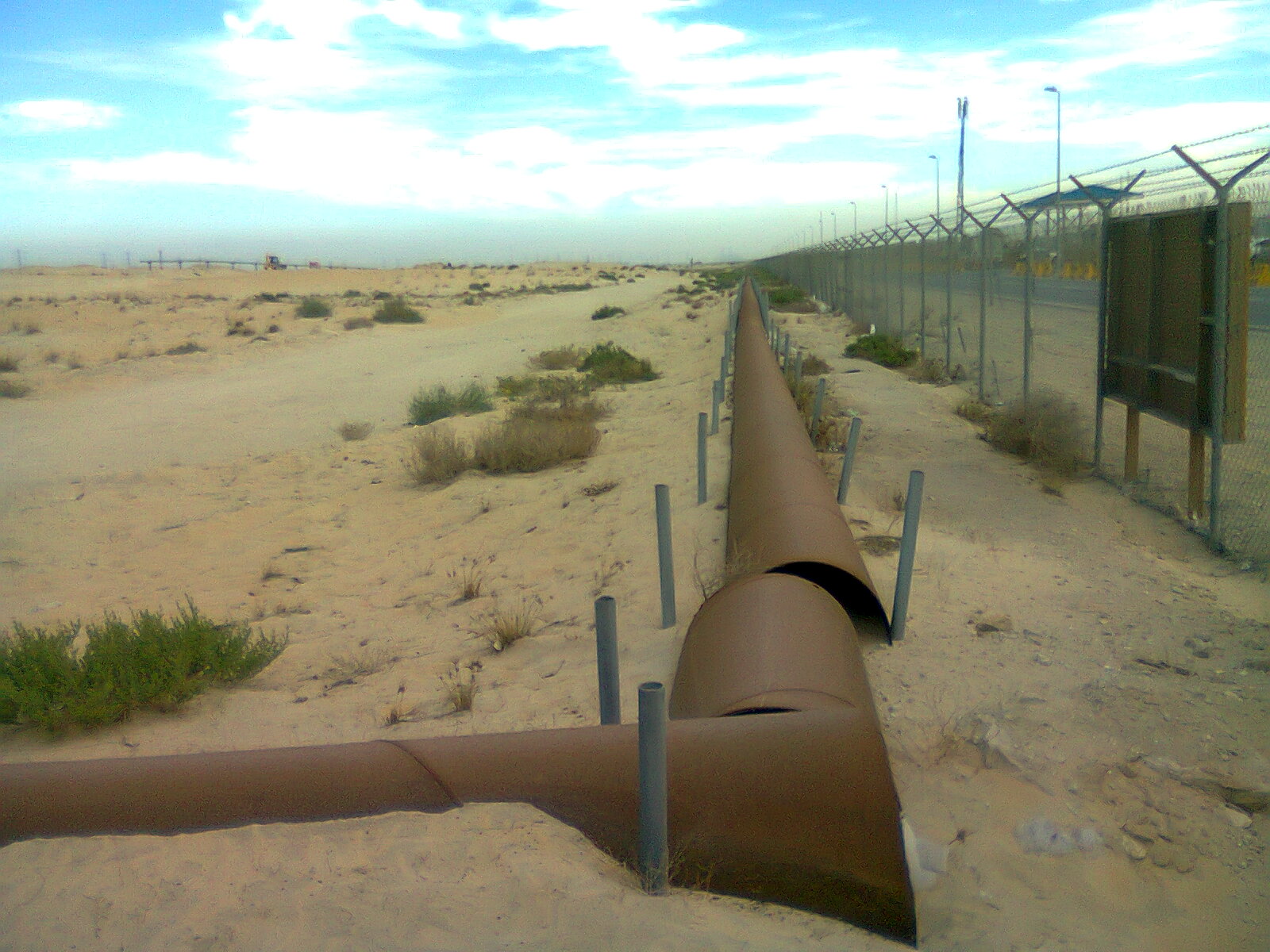
Featured photograph (archive, 2012): Suresh Babunair / Wikimedia Commons, CC BY 3.0. Pipelines near Jubail; this is not the East–West line discussed above. Original file; site display may crop the preview.
The conversation
0 comments
Join the discussion with a thoughtful response.