
A cloth made by resisting colour
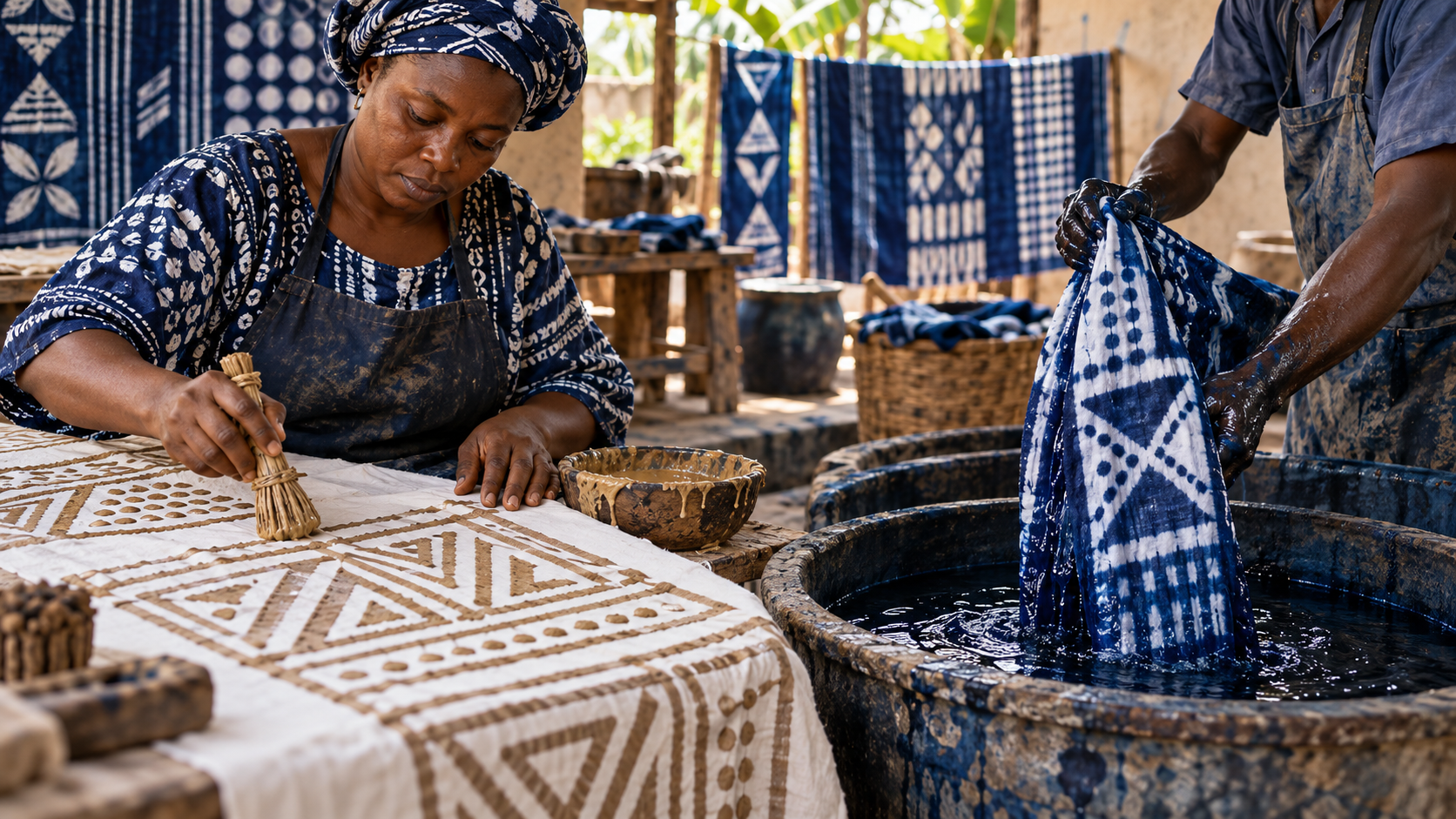
Àdìrẹ is an indigo-dyed cotton cloth associated with Yoruba communities in south-western Nigeria. Its patterns begin before the fabric enters the dye pot. A maker decides which areas should remain pale, then ties, stitches, folds or paints those sections so they resist the colour. After dyeing and unbinding, the contrast appears: blue grounds, white marks and a pattern whose small irregularities preserve the trace of a hand at work.
The many ways to hold dye back
The V&A describes several techniques. In àdìrẹ oniko, raffia can be tied around raised sections, sometimes with stones or seeds tucked inside to create circles. Stitch-resist methods gather and sew the cloth before dyeing. Àdìrẹ eleko uses cassava starch, applied freehand or through a stencil; the paste shields the fabric and is washed away once the dye has taken. Hand-painted cloth is another practice, in which a maker draws with tools such as feathers or palm midribs. These methods do not simply produce different looks: they require different kinds of preparation, time and skill.
Patterns carry local memory
Some designs are named, but those names can change across places and generations. A pattern that one community recognizes may have another title elsewhere, and cloth can become fashionable for a moment before new designs replace it. The V&A’s collection notes a 1960s Ibadan pattern associated with Mapo Hall and the phrase “Ibadan is good,” as well as the way a popular design could be eclipsed by a new “cloth of the year.” That history pushes against the idea that heritage must be static. Makers have always responded to materials, customers and their own imaginations.
From wrapper to contemporary fashion
Historically, àdìrẹ was often worn as a wrap; the V&A describes cloths made from joined strips of cotton and later tailored into garments such as shirts. Today, designers and wearers continue to bring indigo resist cloth into new silhouettes, including dresses, shirts, bags and accessories. Some contemporary techniques use wax, paraffin or block printing alongside older approaches. Continuity is not measured by whether every step remains identical. It can be seen in how makers carry forward a visual language while experimenting with process, scale and use.
The labour behind a beautiful surface
The final cloth may be admired from across a room, but the work happens up close: preparing cotton, mixing or maintaining dye, binding hundreds of points, repeating dips to deepen a shade and unpicking the resist without tearing the fabric. Each method has its own margin for chance. A tie can slip; a starch line can spread; the dye can deepen unevenly. Rather than treating every variation as a flaw, it is worth asking whether that variation is part of the technique and the maker’s intent. Looking carefully gives the craft more credit than calling it “just a print.”
How to buy and care for àdìrẹ
Ask who made the textile, which technique was used and whether the cloth is hand-dyed or printed. Those questions help distinguish craft from imitation without dismissing the value of accessible designs. Follow the maker’s washing directions: indigo may release excess dye, so gentle washing and keeping it separate at first can protect other clothes. Store it dry, avoid prolonged direct sun and repair seams before a small tear grows. Supporting a maker means paying for knowledge and labour, not only purchasing a pattern.
A living design tradition
Àdìrẹ is neither a relic nor a single trademark look. It is a changing body of textile knowledge shaped by Yoruba makers, materials, markets and fashion. The strongest way to appreciate it is to learn the differences among its methods, credit practitioners when sharing images, and leave room for contemporary artists to define what the cloth can become.
Sources
Victoria and Albert Museum: Àdìrẹ – tied and dyed indigo textiles · V&A: Africa Fashion, cloth of a continent