
Somewhere on the internet a grown adult has inspected a clock emoji for evidence that Marvel is about to release a trailer. This is what Doctor Doom has accomplished before buying a single ticket. In one November discussion a fan carefully pointed out that the clock in question was simply the default emoji. An admirably sensible intervention, although by then several thousand people appeared to have moved on to the serious business of interpreting the countdown. Hollywood used to have to pay for this much publicity.
Avengers: Doomsday opens in US cinemas on December 18, 2026. Disney gives December 16 for the UK. Filmhouse Cinemas has also advertised December 18 in Nigeria, according to a publicly indexed repost by FilmOne Entertainment. That is a date to pencil in for Filmhouse. A particular branch, screening time, ticket price or premium format requires a listing from the exhibitor. The UK poster reproduced with this article carries a UK date. Your Nigerian cinema has not misplaced two days of the calendar.
The immediate news as of November 20 concerns something audiences can actually see. A new behind the scenes featurette has circulated with a group of heroes together in a woodland setting. Disney has also announced an American television preview for November 30. Principal photography wrapped earlier in the Doomsday production cycle. The newly released set material is a look back at the making of the Doomsday film. Its appearance this week gives us no reason to report that those actors are presently standing in that forest, waiting for somebody to find Chris Evans a chair.
The dates and the next piece of footage
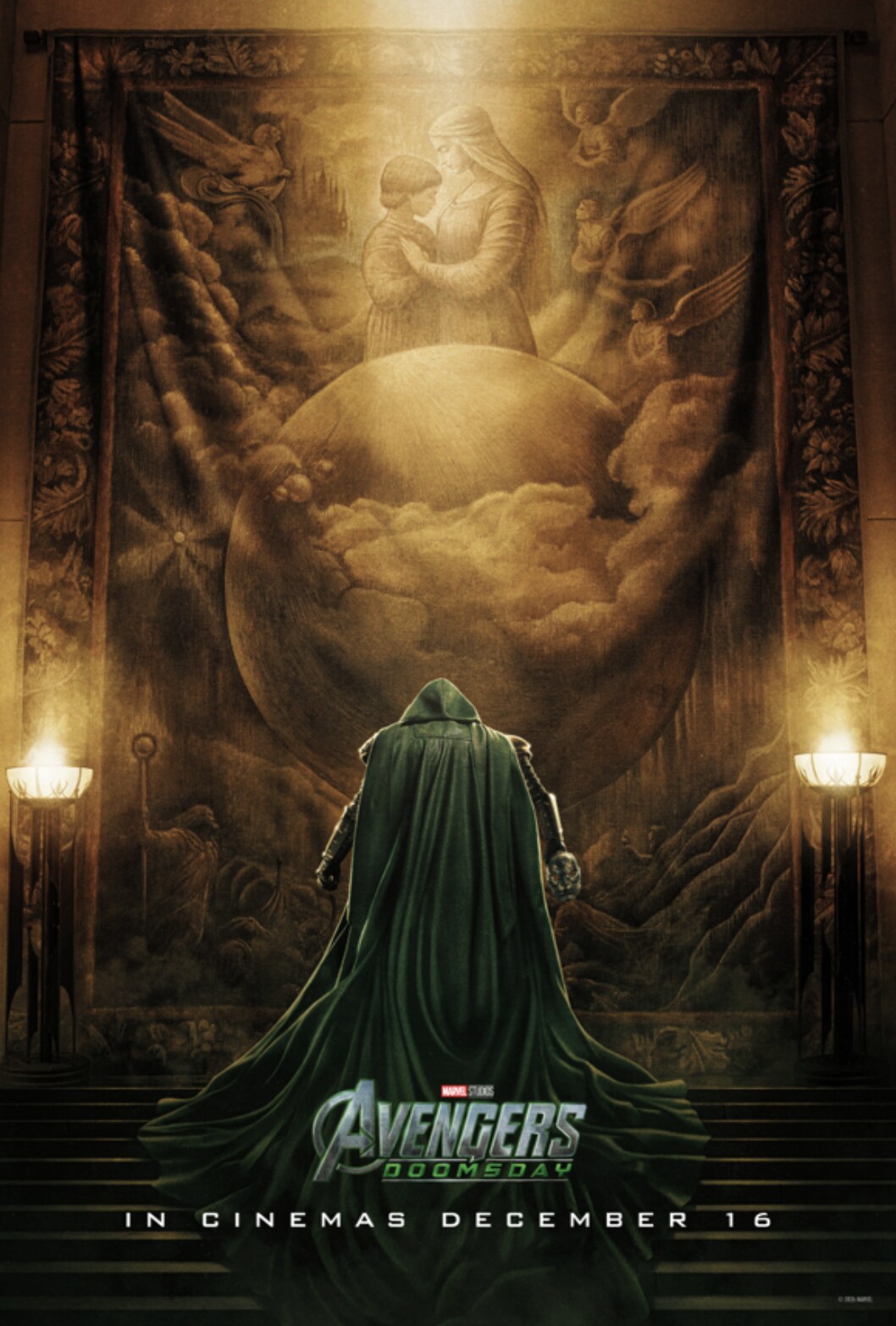
Disney’s US listing describes a theatrical release on Friday, December 18. The UK publicity office announced its Wednesday opening when it released the Doomsday trailer and poster in July. These are both first party sources describing their respective markets. The difference matters because posters travel rather more efficiently than film distributors. A Nigerian fan can wake up to a London poster on Instagram, a Los Angeles countdown on YouTube and a local cinema promotion before breakfast. All three can be perfectly genuine and still require a label telling you whom they address.
For Nigeria the practical source is the cinema that will sell the ticket. An advertised opening date is useful advance information. A branch listing answers the next question. One venue may open bookings before another. A late night screening can be attached to a different business day on different booking systems. Check the date and time on the actual ticket, especially if the plan involves coordinating a group whose members have historically struggled to agree on a restaurant five minutes from home.
One detail to look for at booking is the format named on the listing. A release date applies to a film in a market. It need not mean that every screen in that market offers the same sound system, projection or seat price. If a group is pooling money, compare the total for the particular performance before treating a promotional price as the cost of the evening. It is a small administrative precaution that has saved more friendships than any Avengers intervention on record.
The next dated promotional event is earlier. According to The Direct’s November 19 report on Disney’s announcement, ABC will carry a Doomsday preview during The Wonderful World of Disney: Holiday Spectacular on November 30. The announced US broadcast time is 8 p.m. ET/PT, with the programme scheduled for Hulu and Disney+ the following day in the stated US rollout. That is news about a television special. Disney has described a sneak peek. Whether it is a complete final trailer is a separate question that an enthusiastic countdown cannot answer.
There is a revealing little business decision in putting superhero footage inside a holiday broadcast. The people who search Marvel’s channels daily will find the Doomsday footage wherever it appears. A network special can put the material in front of families who have given comparatively little thought to multiversal logistics. The film needs both audiences. It also needs the second group to leave the preview believing they can follow the Doomsday story without enrolling for evening classes in the first five phases of the Marvel Cinematic Universe.
What the forest footage actually establishes
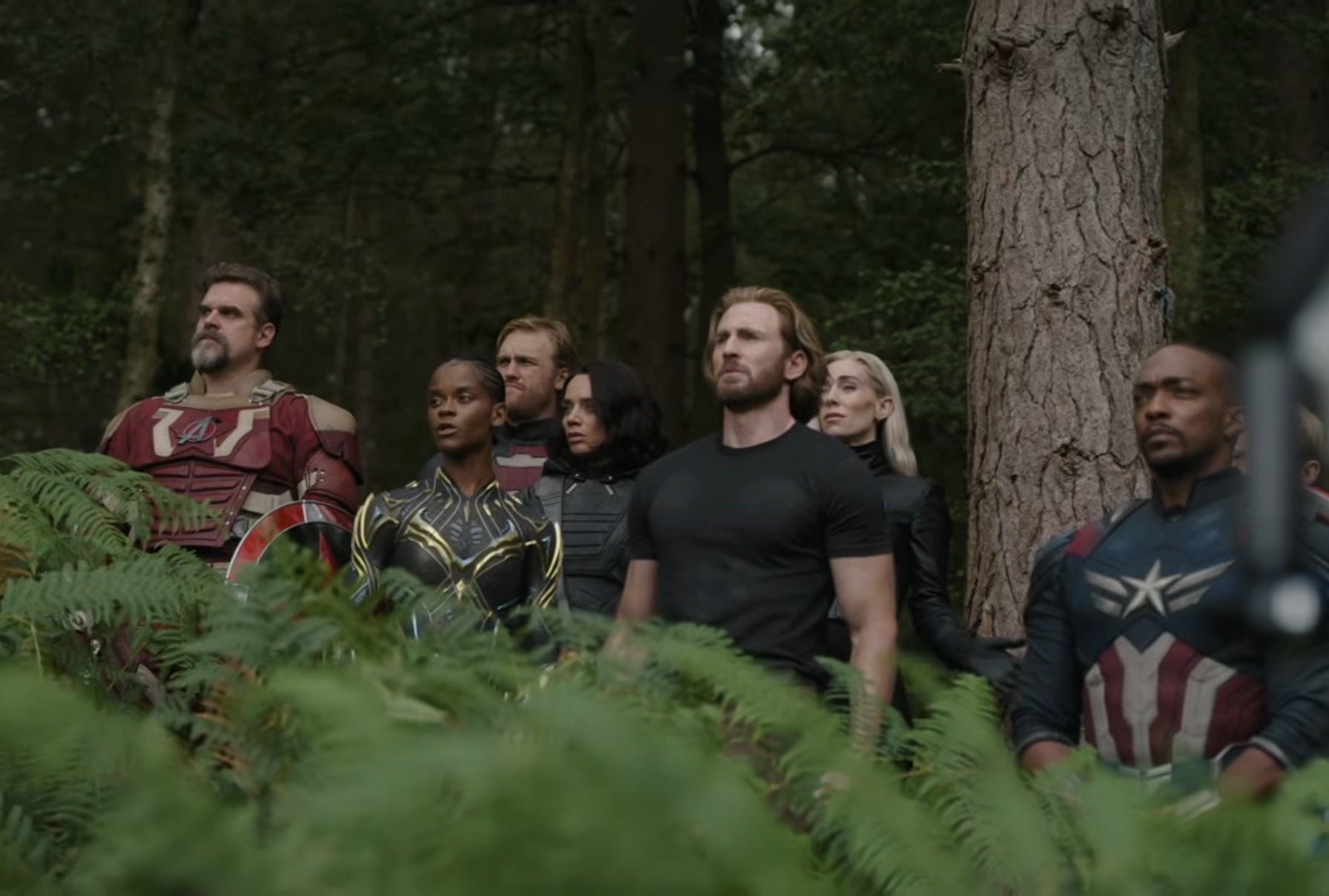
Comic Basics reported on November 18 that a featurette titled The Return shows Steve Rogers, Sam Wilson, Shuri, Red Guardian, Ghost, U.S. Agent, the Human Torch and the Invisible Woman together in a forest. DiscussingFilm shared a set image the same day. The immediate pleasure of the shot is easy to understand. These performers belong to different corners of a sprawling franchise. Here they are sharing ground, light and a direction in which to look. At last somebody has persuaded several incompatible cinematic calendars to attend the same outdoor meeting.
Look at what that image establishes before asking what it means. A group of costumed characters appears in the same production material. The setting includes trees. The composition places Steve Rogers and Sam Wilson within the same visual field. It does not identify the country in the Doomsday story, the sequence’s place in the finished film, the person or object just outside the frame or the version of events the Doomsday audience will finally see. Fans have suggested Latveria. That is a theory about the image, rather than information written into the bark.
A set photograph compresses a peculiar number of uncertainties into one apparently candid moment. Actors may be rehearsing a scene, waiting for a camera move or filming material that later changes. A publicity photographer can stand somewhere the Doomsday movie camera never goes. A featurette can cut together material from different days to illustrate a theme. All of that makes behind the scenes material interesting in its own right. It also makes it an unreliable substitute for a plot synopsis.
There is still something of substance to discuss. Placing a former Captain America close to the current one creates an immediate dramatic question about whose authority other characters recognise. Putting members of the Fantastic Four beside heroes with established team loyalties raises the prospect of people with different ideas about leadership trying to solve one emergency. Those tensions need no leaked script to make sense. Good ensemble writing can build an entire scene from two capable people disagreeing about the correct first move.
The photograph the directors wanted people to puzzle over
An earlier set image shared by directors Anthony and Joe Russo on Instagram offered an almost comic contrast with the forest group. A shadowy figure sat in a chair amid production equipment. The directors supplied a brief invitation to examine the frame. Fans obliged with the concentration usually reserved for a disputed penalty in a cup final. Laughing Place covered the post after principal production wrapped. The original social post is linked below so that readers can inspect what the directors actually released.
What makes the photograph interesting is the limited nature of its invitation. Someone put the camera in that position and elected to publish the result. That establishes authorial intention at a very basic level. It does not establish that every object in the photograph carries a clue to the Doomsday story. A lamp might mean something. It might equally mean the crew wanted to see what it was doing. The cinema, for all its technological advances, remains heavily dependent on the ability to find the light switch.
The Russos have a particularly receptive audience for this sort of game because their previous Avengers films rewarded attention to relationships built across several earlier stories. Viewers learned that a line remembered from one film could acquire a different emotional weight in another. Publicity departments have discovered that the same habit can be directed at a picture of a chair. The difference is that the emotional payoff in a film is written and edited. Public speculation supplies its own payoff and is perfectly capable of billing the studio when it fails to arrive.
So what is happening on set right now? The public record establishes a past production wrap, subsequent discussion of additional photography and a November release of behind the scenes material. The evidence reviewed for this article establishes no current shoot on a named set on November 20. The production activity the public can follow this week is the Doomsday release of material already shot and the final weeks of the exhibition campaign. Anyone advertising access to today's filming schedule ought to arrive with something more substantial than yesterday's featurette.
The difficult business of bringing Robert Downey Jr. back
The filmmakers have an unusual asset in Robert Downey Jr. Audiences know his face, his rhythms and the precise sort of interruption with which he can make a room feel suddenly less formal. They also associate him with Tony Stark, whose story supplied much of the emotional architecture of Avengers: Endgame. In Doomsday he plays Victor von Doom. The casting asks viewers to carry an old emotional memory into a new relationship with the performer. That is a considerable advantage and a considerable directing problem.
Imagine the first sustained scene between Doom and a hero meeting him for the first time. People in the cinema may have stronger feelings about the face or voice than the character standing opposite him has any reason to possess. The screenplay has to decide what to do with that disparity. It can make it part of the drama, allow it to remain a private experience for the Doomsday audience or gradually make the villain so specific that the earlier role recedes. Each option calls for different choices of dialogue, framing and pace.
The Return explicitly places Downey’s earlier work alongside the new role. That makes sense for a promotional piece. A marketing department would have to display positively heroic restraint to employ one of the most recognisable stars in the genre and decline to remind anyone why they recognise him. In the Doomsday film itself, however, recognition has a limited shelf life. The audience eventually needs to know what Doom wants, what he is prepared to do about it and why his opponents cannot simply solve the problem by assembling more famous people.
The best villains can be understood in a sentence and debated for years. A clear immediate objective makes it possible for an audience to track a conflict even while the larger mythology grows complicated. Doom’s presence therefore offers a potential service to newcomers as well as longtime fans. If his actions supply a clean dramatic line, the viewer can meet a large cast by observing how each responds under pressure. A villain who spends the opening hour explaining the filing system of the multiverse would provide rather less assistance.
Why a large cast can feel like a small story
An ensemble adventure needs an emotional unit smaller than the ensemble. That unit might be a friendship, a rivalry, a family argument or an uneasy partnership between two people with different responsibilities. Once the viewer cares what happens between them, the wider spectacle has somewhere to land. Without such a unit, an expensive confrontation can resemble an awards ceremony at which every guest has been promised a close-up and nobody has been placed in charge of the running time.
The forest shot suggests several possible combinations. Steve and Sam carry one history between them. The Fantastic Four bring family connections into a gathering of people whose relationships are often professional or improvised. Shuri arrives with responsibilities that extend beyond the fate of any one team. The film does not need to give every pair equal time. It needs to choose the encounters that reveal something one character could not discover among familiar companions.
Audiences can forgive an astonishing amount of complexity when they understand the immediate human choice. A person deciding whether to trust a stranger, leave home, keep a promise or admit a mistake is recognisable across almost any number of fictional universes. Conversely, the simplest plot can feel laborious if every character pauses to explain which piece of intellectual property they represent. There is a point beyond which a crossover begins to resemble a corporate induction day, however magnificent the costumes.
The Russo brothers have experience with precisely this problem, which is one reason their return carries promotional weight. Experience is evidence that the directors understand the difficulty. It cannot tell us how successfully this particular screenplay and cut handle it. A fan who loved Endgame has good reason for curiosity. A viewer who found the accumulation of Marvel homework tiring has an equally coherent reason for caution. Neither has yet seen enough to deliver a review of the Doomsday film.
What fans actually said
On November 18 a discussion in Reddit’s Marvel Studios community compared the anticipation for another trailer with the run up to Endgame. One participant, jaredwallace91, wrote, “The commenters on the Doomsday countdown video are getting rabid”. Another, hunterzolomon1993, explained the appetite more plainly: “I just want more of an idea on plot and a hint at the some of the action.” The wording is reproduced as posted. The second comment asks for a reason to invest in the Doomsday story, even in a room already packed with people interested enough to discuss its advertising.
A separate November 19 post in the Marvel community supplied a useful counterpoint. Its author wrote, “I honestly don't understand the hype for a second Doomsday trailer.” The stated objection was to the appetite for another trailer. Turning that into evidence that the writer dislikes the Doomsday film would be a spectacular promotion for a sentence that had applied for a much smaller job. Someone can be eager to see the feature and actively wish to avoid seeing another frame of it beforehand.
Elsewhere in the first discussion, Outrageous_Ad4564 questioned whether a clock emoji shared in connection with actor Simu Liu meant what fans hoped it meant. That exchange captures a third kind of participation. Some people enjoy the collective detective work as an event in itself. They may be delighted when a prediction holds and equally entertained when the internet spends a perfectly good afternoon studying the default setting of a mobile phone. Their enthusiasm measures the vitality of the conversation. Its relationship to ticket sales is a different inquiry.
These are examples gathered from two self selected Reddit discussions about trailers on November 18 and 19. They offer identifiable opinions with dates and context. They provide no denominator for the cinema audience in Nigeria, the United States or anywhere else. A fan community overrepresents people who enjoy discussing the subject and may underrepresent viewers who buy a ticket chiefly because a friend wants company. A handful of comments supports a reading of what divides this particular conversation. It cannot support a percentage forecast for the whole audience.
What might make people love it, or leave disappointed?
The most promising sign is that people are asking for different things the same film could conceivably provide. The viewer who wants a clear idea of the plot and the viewer who wants to keep the surprises intact need not be in conflict once the lights go down. A strong opening can establish the stakes quickly while leaving the reversals undisclosed. A good trailer campaign can sell the nature of the experience without itemising the order in which every guest star will walk through a portal.
Nostalgia is trickier. Recognition produces a burst of goodwill that a filmmaker can spend on a new idea. If an appearance leads to an unexpected choice or changes a relationship, the investment can pay off. If the narrative merely stops while an actor waits for the applause to subside, viewers who never formed the original attachment are left watching strangers enjoy a private joke. One or two such pauses can be charming. Enough of them and the Doomsday story begins to move at the pace of an airport queue.
For Nigerian audiences, enjoyment also has a material context. An outing may involve transport, tickets for several people, food and the effort of matching schedules. That can change how forgiving a person feels about an evening that delivers little beyond scenes already prominent in the Doomsday trailers. It also helps explain why reliable local listings matter. A global release announcement has enormous promotional value to a studio. A confirmed screening at a convenient branch is what finally enables somebody to make an actual plan.
There is no honest number for how many will love or hate Doomsday before public screenings produce a meaningful body of responses. There are clear criteria on which those responses may turn. Does the villain possess a recognisable purpose? Can a newcomer understand the immediate stakes? Do returning characters have something to do that matters to the present story? Does the Doomsday film offer enough visual and emotional discovery beyond the campaign? Those are questions a review can eventually answer with scenes and performances. A trailer reaction can only tell us what people hope the answers will be.
A viewer’s guide to the final month
For the reader who wants to remain broadly informed without acquiring an accidental doctorate in fan theory, three sources will do most of the work. Use the distributor for national release dates, the local cinema for actual showtimes and the studio’s own channels for promotional material. When a new image travels through an entertainment account, look for its original publication and date. A genuine picture with an inaccurate caption can produce as much confusion as an invented one and is usually more persuasive.
For readers actively enjoying the speculation, the most rewarding question to ask of a picture may be about filmmaking. Where is the apparent source of light? Which characters are grouped together? Whose attention directs ours? What information is being withheld by the edge of the frame? Those questions remain interesting even if every theory about the plot turns out to be wrong. They also encourage a closer look at the people responsible for costume, design, photography and editing, whose work tends to survive the promotional cycle more gracefully than the predictions.
November 30 is the next announced appointment for US viewers interested in fresh material. December 16 is Disney’s UK theatrical date. December 18 is the US opening and the date Filmhouse has advertised for Nigeria. Between now and then there will doubtless be more pictures, more confident predictions and at least one entirely innocent object asked to reveal the secrets of the Marvel universe. The only verdict that counts for a ticket buyer arrives when the Doomsday movie ends. By that point even the clock emoji can take the evening off.
Release information: Disney US, Disney UK press announcement and the indexed FilmOne repost. See the woodland set photo, the directors’ original set photograph and the November preview announcement. Fan comments come from the November 18 trailer discussion and the November 19 counterpoint. More in Film and Media.
The conversation
0 comments
Join the discussion with a thoughtful response.