
Water does not make raw poultry safe
Some cooks rinse raw chicken as if water will remove harmful germs. It does not reliably make poultry safe, and splashing can carry droplets onto taps, counters, utensils and other food. The United States Department of Agriculture advises against washing raw poultry for this reason. The safer method is to keep the raw chicken contained, prevent its juices from touching ready-to-eat foods and clean hands and surfaces after handling it.
Keep the splash zone out of the kitchen
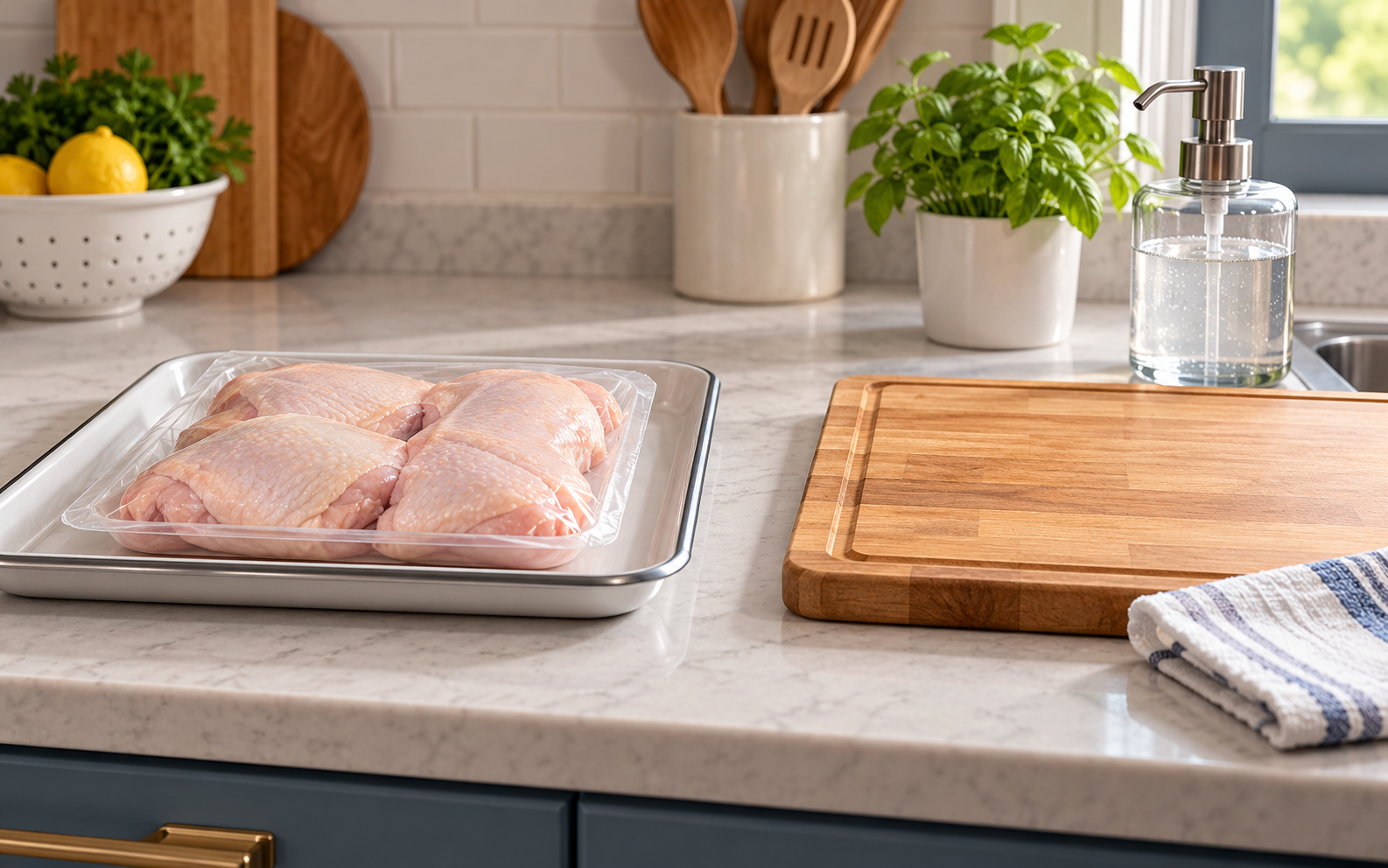
Plan the sequence before opening the package. Keep a dedicated board or tray for raw poultry, place it away from salad ingredients and cooked food, and wash the board, knife and counter with hot soapy water after use. If poultry packaging leaks, clean the area promptly. Do not use the same unwashed utensil to handle cooked food that touched the raw product. Separation prevents the transfer that rinsing may actually spread.
Cooking and temperature matter
Thorough cooking is the step that reduces pathogens in poultry. WHO’s food-safety guidance recommends cooking thoroughly and using a thermometer when available; its general reference for cooking is 70°C at the centre. A thermometer is more reliable than colour alone. Follow local food-safety guidance for the specific dish and equipment. Anyone who becomes seriously ill after eating should seek medical care. The kitchen lesson is practical: keep raw poultry away from other foods, wash hands and tools, and use adequate cooking rather than a rinse.
Source: Read the reporting reference