
A sound that belongs to a room
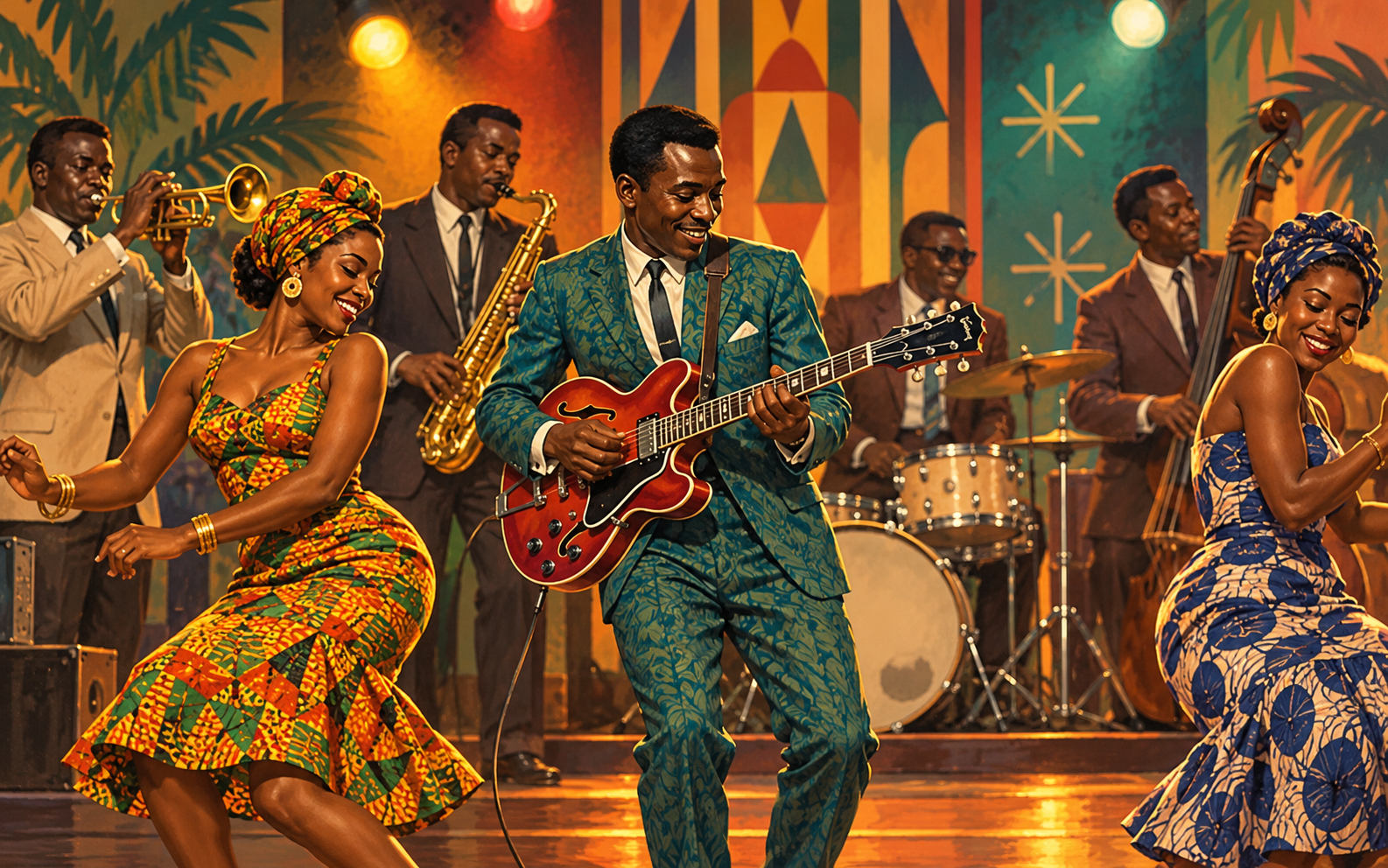
On a highlife dance floor, the music is not a soundtrack floating above the occasion. It is part of the occasion: musicians shape a pulse, dancers answer it with movement, and a chorus can travel from the bandstand into the crowd. That exchange helps explain why highlife is best understood as a living social practice as well as a musical style. It has accompanied weddings, funerals, festivals, naming ceremonies and nights of ordinary recreation, carrying memory and commentary through a form people can share together.
The band is an arrangement of conversations
The familiar highlife palette can include guitars, horns, drums, xylophones and other percussion. The instruments do more than take turns displaying virtuosity. A lead guitar may state a phrase that the horns colour; a singer offers a line that a chorus repeats or answers; percussion keeps the body close to the beat while leaving room for a dancer to improvise. Different bands emphasize these parts differently, so no single instrumental formula can stand for every highlife performance. The pleasure is often in hearing how the musicians make the pieces converse without losing the groove that keeps the floor moving.
One name, several routes
Listeners and historians use labels such as dance-band highlife, guitar-band highlife and burger highlife to make a large history easier to navigate. They point to changing ensembles, technologies, audiences and circuits of performance, but they are guides rather than sealed boxes. A band may carry a dance-hall arrangement into a recording studio; a guitar-led sound may draw on older ensemble habits; a later production may reach listeners far from the place where the song was first made. The musical story is therefore not a straight march from one style to the next. Older and newer approaches meet, overlap and are reinterpreted by musicians for the people in front of them.
Lyrics that speak across languages
Highlife singers have worked in local languages, English and Pidgin, among other forms of expression. That range lets a song move between intimate observation and public address. A lyric might describe romance, work, family obligation, political frustration or a small comic contradiction; a familiar refrain can make a complicated point easier to remember. Call-and-response is not simply a catchy device. It gives listeners a role in the performance, even when the audience joins only at the chorus. The shared line becomes a meeting place where personal experience and communal recognition can sit side by side.
How a living tradition is learned
UNESCO’s 2025 inscription of highlife music and dance recognizes storytelling, performance and transmission as part of the tradition. The most important word here is living. Knowledge passes through musicians, apprentices, families, schools and community events; it is not preserved only in recordings or museum collections. A younger player can learn a melodic turn from an older performer, then place it in a new arrangement or a different venue. The change does not necessarily erase what came before. It can be evidence that the music still has something to say to the present.
A listening guide for the next dance
When listening, begin with the whole ensemble rather than hunting for one defining instrument. Follow the bass pulse, notice how a guitar line repeats with slight changes, and listen for the moment a singer leaves room for a response. Then pay attention to the social setting described by the lyrics and to the movement the rhythm invites. Highlife’s history becomes clearer when sound, language and occasion are considered together. It is a music made to be heard, but also to be joined: a record of changing lives that keeps its memory in motion.
Sources: UNESCO: Highlife music and dance.