
Sudan’s war is entering another dangerous phase for civilians as fighting and reported drone strikes continue across Kordofan and the Blue Nile region. United Nations briefings and recent Associated Press reporting describe renewed danger in areas where families already face displacement, shortages and uncertainty about which routes remain safe.
This is not a single-front conflict with a stable line that can be summarized on one map. Control shifts, communications fail and accounts from local officials, humanitarian agencies and armed factions do not always match. The most reliable picture comes from comparing multiple reports—and saying plainly where attribution is still disputed.
What the latest reporting says
A 16 October update from the United Nations Department of Political and Peacebuilding Affairs warned that active fighting continued to threaten civilians in North and South Kordofan and Blue Nile. The agency’s account points to a conflict that remains nationally consequential even when international attention moves elsewhere. Days later, AP reported attacks and drone strikes that killed children and other civilians in Khartoum and Kordofan, citing local information and the circumstances available to reporters at the time.
Those reports are not interchangeable with a full independent casualty audit. In a war zone, early figures can change as hospitals, local authorities and aid groups reconcile information. Where a claim comes from a local official, it should be identified as such. Where responsibility for an attack has not been independently established, it should not be presented as settled fact.
Why Kordofan matters
Kordofan sits between major population centres and routes linking the country’s west, centre and south. Control of roads, towns and supply corridors affects who can move, whether food and medicine can reach communities, and whether civilians have a realistic option to leave. The Blue Nile region adds another dimension: fighting there can widen the geographic burden of the war and strain already limited humanitarian access.
Even when a town is not under direct attack, the practical consequences travel. Families may lose access to markets, clinics, schools and safe transport. Displacement can break up households and leave people reliant on informal networks. Aid agencies need access and security guarantees before they can reach many of the people who need help; a convoy that cannot travel is not relief delivered.
The danger of treating displacement as a statistic
Numbers help show scale, but they do not describe how families decide whether to stay, move or return. People weigh food, water, shelter, medical needs, safety on the road and the risk of separating from relatives. A family may flee more than once, and registration systems do not capture every move. That is why humanitarian agencies often present estimates with caveats rather than pretending every figure is exact.
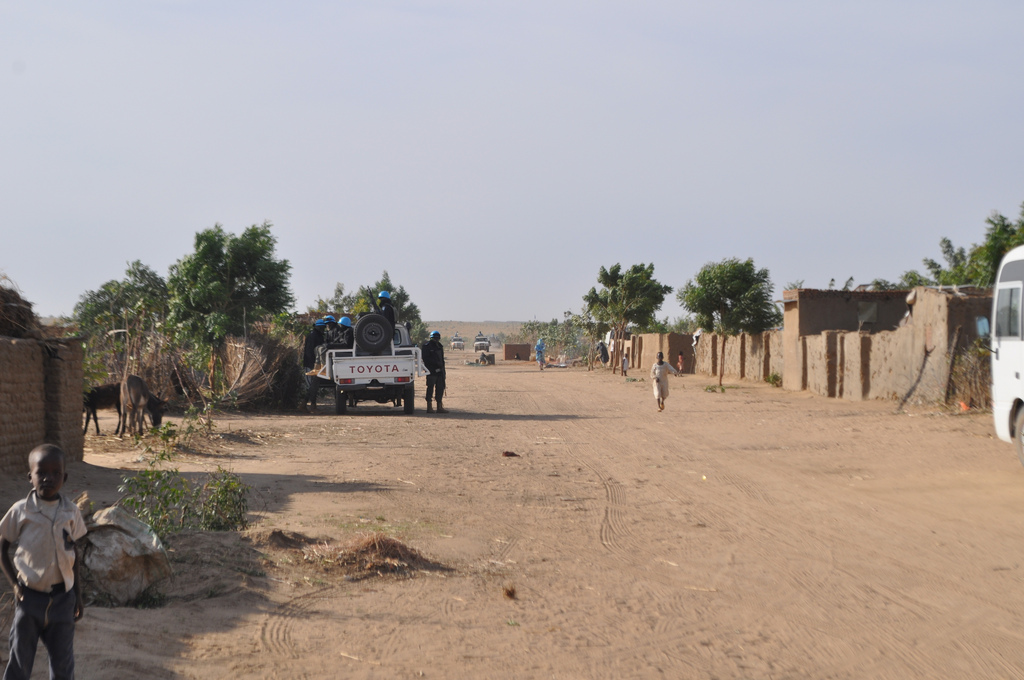
The photograph accompanying this report is a 2009 archive image from an IDP camp in El Geneina, West Darfur. It is not a current photograph of the October 2026 fighting or a specific site mentioned in the latest reports. The distinction is essential: an illustrative image should help readers understand the subject, not mislead them about where or when it was taken.
What to watch now
Watch for verified changes in control, independent reporting on attacks, access for humanitarian organizations and safe routes for civilians. Also look for public statements from the parties that can be checked against reporting from the UN and established newsrooms. A confident claim from a belligerent is not proof; a careful report should separate confirmed events from allegations and estimates.
Sudan’s civilians need protection, access to aid and a path away from fighting. The latest reports do not offer a simple resolution. They do show why continued attention matters: when the headlines thin out, the danger on the ground does not automatically follow.
Sources: UN Department of Political and Peacebuilding Affairs, 16 October 2026; Associated Press, 19 October 2026, on attacks and drone strikes; Associated Press, 20 October 2026, on the Abyei market strike.