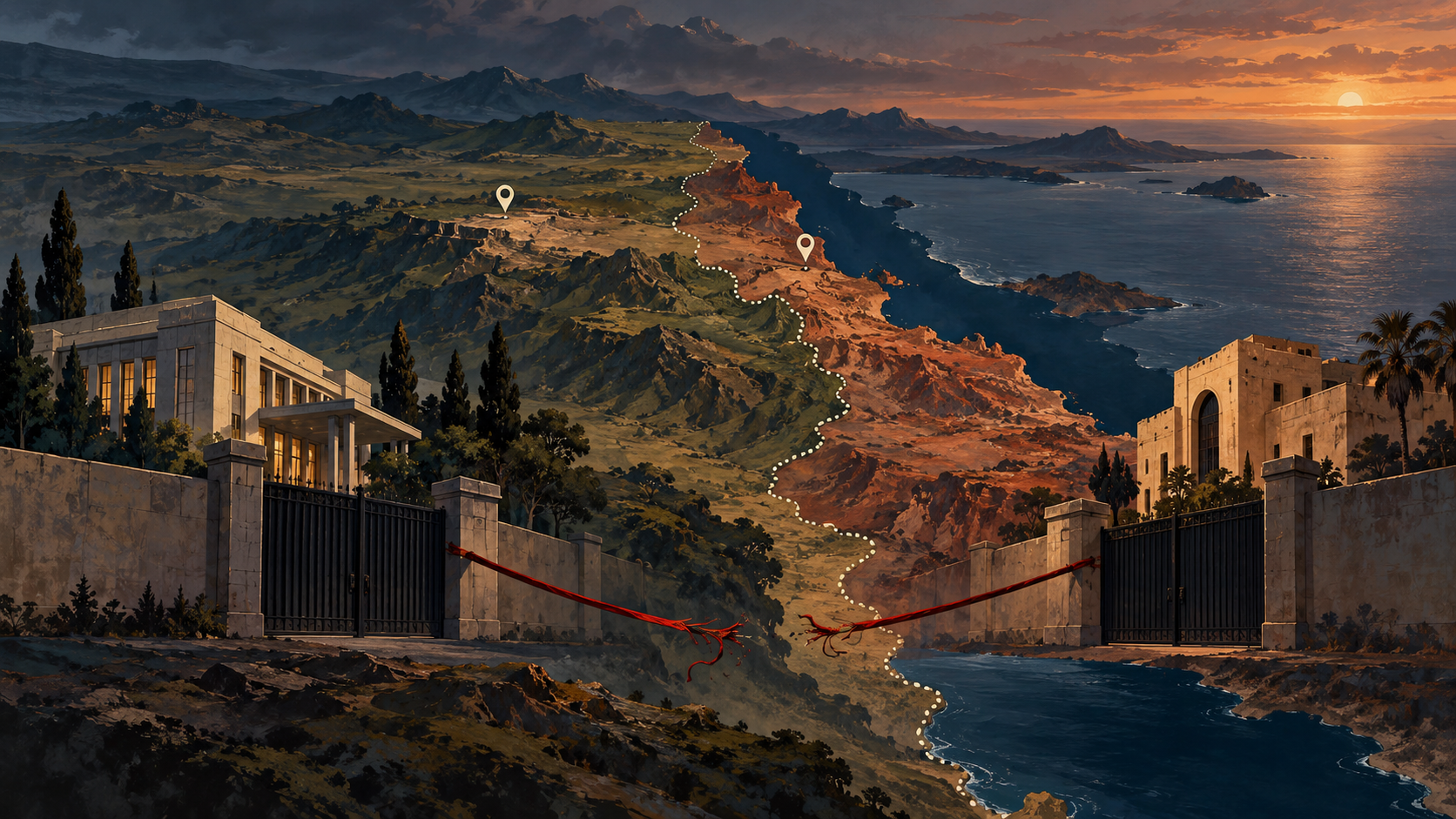

Ethiopia has ordered ten Eritrean diplomats to leave within 48 hours and said it will close its embassy in Asmara. Eritrea has answered by declaring that it will sever diplomatic relations. The exchange on 1 October turns a deteriorating relationship into an open diplomatic rupture while renewed fighting in northern Ethiopia raises fears of a wider regional crisis.
The immediate decisions are confirmed by Ethiopia's Government Communication Service and a statement from Eritrea's Foreign Ministry. Their explanations for the crisis, however, are sharply disputed. Both governments accuse the other of threatening its security; neither side's allegations should be mistaken for independently established facts.
The diplomatic break
Addis Ababa said it was shutting its mission in the Eritrean capital and declaring ten Eritrean diplomats persona non grata. Its government announcement specifies the 48-hour deadline. Ethiopia's Foreign Ministry accused the diplomats of activities that endangered national security and alleged hostile conduct by Eritrea. The public statement provides the government's position, but it does not by itself establish the underlying accusations.
Asmara rejected that account. In its own statement, Eritrea's Foreign Ministry called Ethiopia's move unwarranted, accused Addis Ababa of pursuing hostile policies and said it would reciprocate by severing diplomatic ties. Those accusations are Eritrea's claims. The important confirmed development is the collapse of formal diplomatic representation at a moment when communication between the neighbours is especially valuable.
The language from both capitals matters because it narrows the room for routine crisis management. Embassies are not a guarantee against conflict, but they provide direct channels for clarifications, consular issues and urgent messages. Removing them increases reliance on intermediaries just as the security picture has become more volatile.
A northern war, and competing allegations
The rupture comes amid renewed fighting between Ethiopian federal forces and fighters aligned with the Tigray People's Liberation Front. Associated Press reported that Ethiopia's army chief accused Eritrea of providing financial support to Tigrayan rebels and suggested possible backing from other neighbours. Eritrea has denied allegations that it supports the armed opposition. The claims remain contested.
Reporting from the region indicates that Tigrayan forces have seized strategic locations, including airports, while flights to parts of northern Ethiopia have been suspended. The renewed fighting follows the African Union-brokered Pretoria agreement of November 2022, which ended two years of war between the Ethiopian government and Tigrayan forces. The agreement remains the central framework for avoiding a return to full-scale conflict, even as its gains are under strain.
Blasts were also heard in Addis Ababa before the diplomatic announcements. Associated Press reported accounts from residents and officials, but said it was unclear whether the explosions reflected an attack or military training. Their cause has not been established publicly. It would be premature to connect them to Eritrea or to any particular armed group.
How the neighbours arrived here
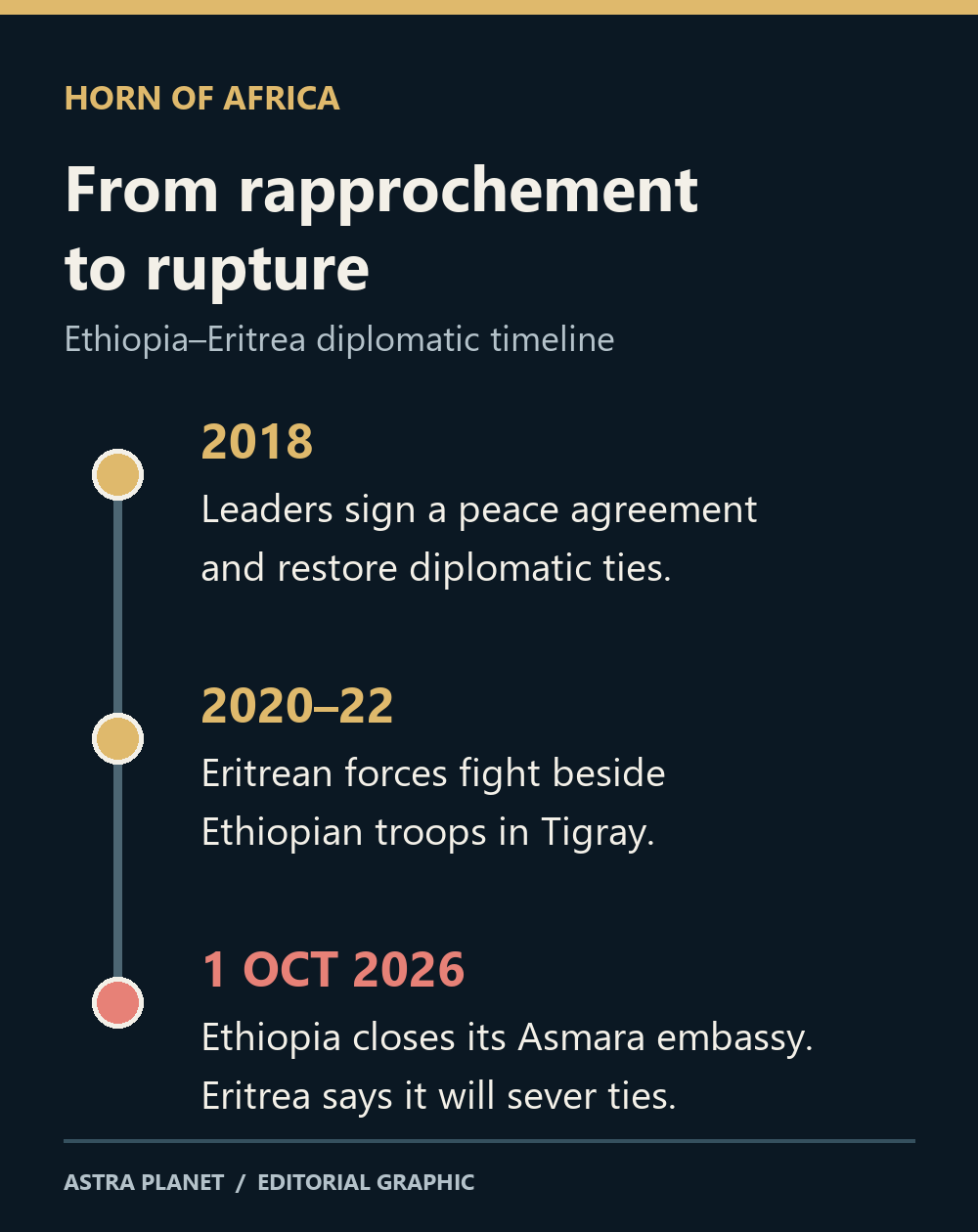
The break is striking because relations were restored with unusual optimism in 2018. Ethiopian Prime Minister Abiy Ahmed and Eritrean President Isaias Afwerki agreed to end a prolonged standoff following their countries' 1998–2000 border war. Abiy's initiative to resolve that conflict was central to the 2019 Nobel Peace Prize citation.
Their alignment changed during and after the Tigray war. Eritrean forces fought alongside Ethiopian federal troops against the TPLF in 2020–2022. More recently, disputes over regional security and Ethiopia's stated desire for access to the Red Sea have added to the mistrust. Eritrea views discussion of sovereign access through its territory as a threat. That dispute helps explain the intensity of the present diplomatic language, but it does not settle the accusations each side now makes.
The African Union's warning
The African Union Commission said on 1 October that it was concerned by heightened tensions involving Ethiopia, Eritrea and Egypt. It urged restraint, the preservation of communication channels and peaceful dialogue, and offered to support de-escalation. That statement does not assign responsibility for the current dispute. It underscores how quickly bilateral tension can become a wider diplomatic problem in the Horn of Africa.
The United Nations had already warned on 23 September that fighting around Tigray and neighbouring areas threatened civilians and humanitarian access. It called for restraint and renewed talks under the Pretoria framework. The diplomatic break adds another obstacle to that appeal: direct contact between Addis Ababa and Asmara has now been curtailed.
What to watch next
The first near-term test is whether the ten diplomats depart within Ethiopia's deadline and whether both governments maintain any practical channel for urgent communication. The second is the course of the fighting in and around Tigray. If hostilities intensify or spill across borders, diplomatic repair will become harder and the pressure on civilians will grow.
For now, the embassy closure, expulsion order and Eritrea's response are verified. Assertions about covert support, military intent and the cause of the Addis Ababa blasts remain disputed or unconfirmed. Regional mediators' ability to keep talks open may be as consequential as the statements issued by either capital.
The conversation
0 comments
Join the discussion with a thoughtful response.