
A cloth made in strips, read as a whole
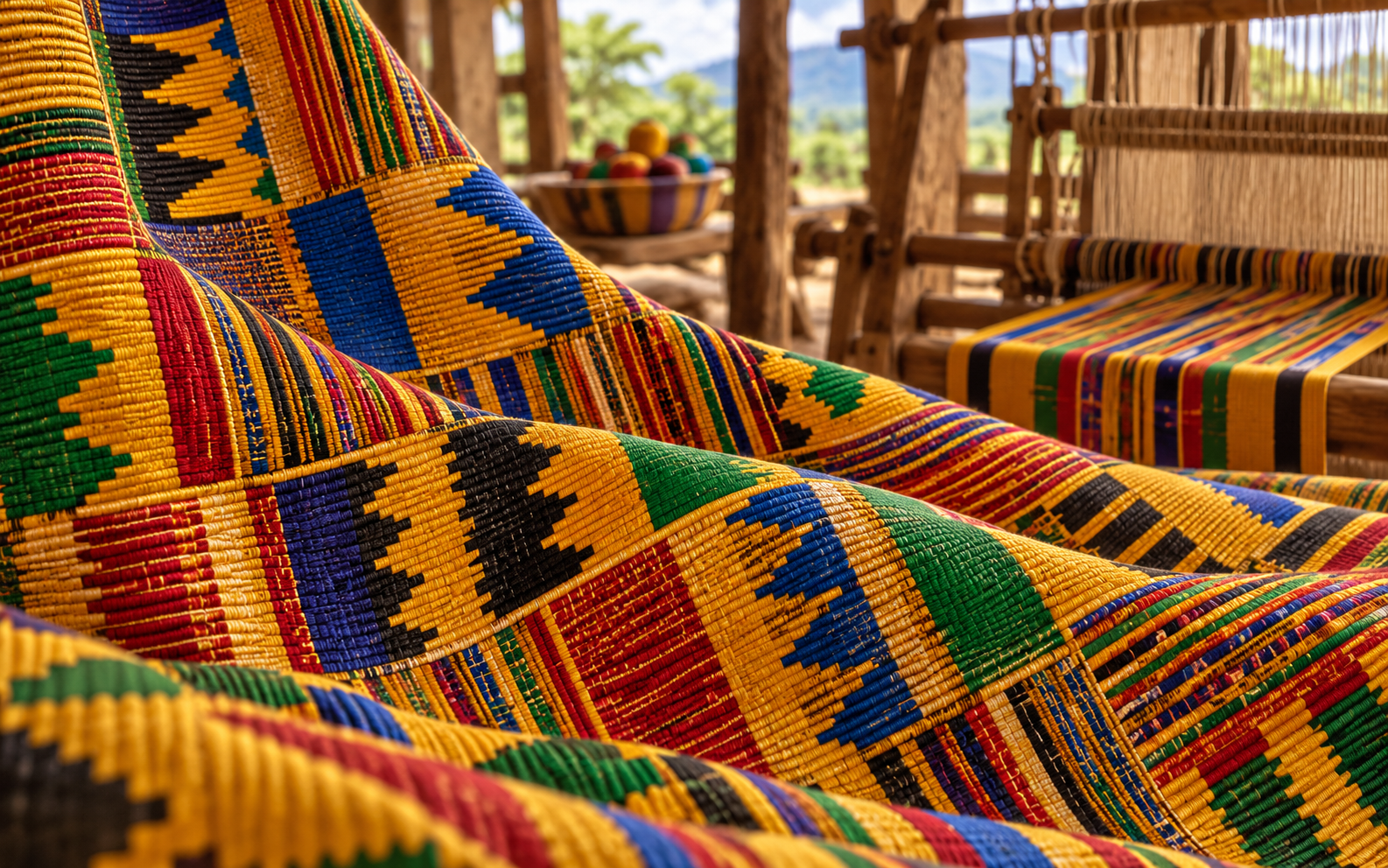
Kente is a woven textile made from narrow strips joined into a larger cloth. Its colour and pattern can be striking from a distance, but the design also carries information about the makers, communities and occasions connected to it. UNESCO’s 2024 inscription recognizes the craftsmanship of traditional kente weaving in Ghana and describes finished cloths named after proverbs, sayings and social situations. The cloth is not just a bright surface; it is a form of communication.
The structure beneath the pattern
Weavers work on horizontal looms, producing strips from silk, cotton or rayon and assembling them into a finished length. Some designs rely on colour and geometry; others bring in more figurative motifs. The particular fibres and techniques vary across communities and workshops. The V&A distinguishes, for example, styles associated with Asante and Ewe makers, while also emphasizing the long history of strip weaving across the region. A single textile can contain repeating structures and small variations that reward close inspection.
Names make patterns speak
Many kente designs are given names by the weaver, often drawing on a proverb, a public event, an everyday object or a social idea. A name may help a wearer connect the cloth to a sentiment or moment, but it should not be treated as a universal dictionary entry. The same colour or pattern can carry different associations in different contexts. Asking a maker about the cloth’s name and intended meaning is more reliable than repeating an internet chart that assigns one fixed interpretation to every colour.
Knowledge travels through generations
UNESCO’s documentation describes knowledge passing through families and apprenticeships with master weavers, as well as through schools, workshops, festivals and museums. The production process involves many kinds of skill. Women and men both participate, with roles that can include weaving, making cotton yarn, constructing looms and tools, and guiding standards within producer communities. The finished cloth may be visible to the wearer, but the system that supports it includes teachers, makers, traders and cultural institutions.
Kente in ceremony and contemporary style
Kente has been worn by Asante and Ewe communities in Ghana and appears in important occasions and celebrations. Today it is also used by designers and wearers in new forms, from tailored garments to accessories and contemporary fashion collections. That wider visibility can bring recognition, but it also raises questions about attribution, copying and who benefits when a cultural design travels. A respectful account names the communities and craft knowledge involved rather than presenting the textile as a generic “African print.”
How to look closely
If you encounter kente in a museum, shop or photograph, notice how the strips are assembled, how colour changes across the cloth and whether the pattern is geometric or figurative. Then look for information about the maker, community and design name. When purchasing, ask whether the piece is handwoven, what materials were used and who made it. Such questions do not reduce the cloth to a commodity; they help make the craft and its knowledge visible.
A living craft with many voices
UNESCO’s recognition is not a declaration that kente has one meaning or belongs to a single community alone. It records a continuing practice in Ghana, sustained by weavers and producer groups. The cloth’s visual confidence comes from careful construction, but its deeper value is also social: designs can carry memory, identity and conversation from one occasion to another. The most useful way to appreciate kente is to see both the artistry and the people who keep it in motion.
Sources
UNESCO: Craftsmanship of traditional woven textile kente · Victoria and Albert Museum: Africa Fashion, cloth of a continent