
The Russia-Africa Summit 2026 closed in Moscow on Thursday with a high-profile appeal for African representation at the United Nations Security Council and a new cooperation plan between Russia and the African Union Commission. The two-day gathering brought delegations from nearly 50 African countries, about 20 represented by national leaders, according to The Associated Press. The AU Commission said its chair, Mahmoud Ali Youssouf, and Russian Foreign Minister Sergey Lavrov signed a 2027 to 2029 action plan on Wednesday. It sets out cooperation across 19 fields, including peace and security, technology, agriculture, education, health and trade. The document is a framework for future work, not a treaty that compels either side to deliver a particular project. That distinction gives the summit its central question: can a broad diplomatic partnership turn into practical benefits that governments and citizens can measure?
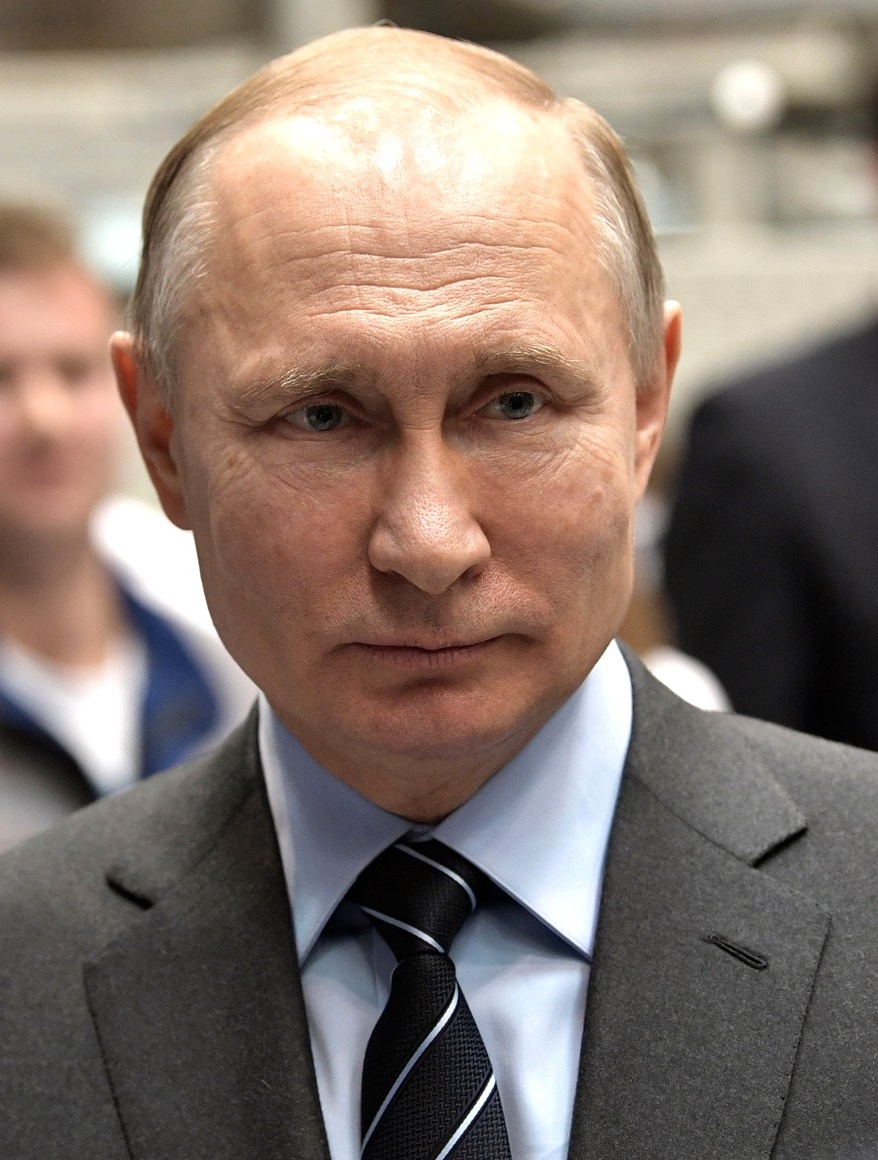
The meeting’s most visible political exchange concerned Africa’s long-running demand for a stronger place in global decision-making. Kenyan President William Ruto told the gathering that the international order should reflect the present world rather than the one that existed in 1945, and argued that Africa cannot remain without a permanent seat on the Security Council. Russian President Vladimir Putin supported the principle, calling the continent’s absence unfair. His endorsement aligns with Moscow’s stated support for reform of international institutions, but it does not settle how the Council would be changed or who would represent Africa if reform became possible. Those choices remain for the United Nations membership and African governments to negotiate.
The African Union has a more detailed position than the broad appeal heard in Moscow. Its Common African Position, set out in the Ezulwini Consensus and Sirte Declaration, calls for at least two permanent seats with the privileges attached to permanent membership, including the veto while that power exists, and five non-permanent seats. In a statement in May, AU Commission Chair Youssouf reiterated that model and described the absence of permanent African representation as a historical injustice. The summit remarks therefore placed a familiar African demand before an international audience rather than announcing a new proposal. The hard part is still the negotiating process: a Council expansion would require agreement among states that already hold power, as well as a continental decision on how any new seats would be allocated.
Ruto’s intervention was notable because it put African agency ahead of the usual contest over which outside power has more influence on the continent. Africa’s 54 member states form the largest voting group at the United Nations, but the continent has no permanent representative on the 15-member Security Council. African officials have argued that this mismatch weakens the body’s legitimacy, particularly when it considers conflicts and sanctions affecting African countries. Ruto’s formulation was aimed at this imbalance. Putin’s agreement may help amplify the case, but African governments have pressed it for decades through the AU and the Committee of Ten, the group tasked with advancing the continent’s position. A persuasive speech from Moscow cannot substitute for that institutional work.
What the new AU plan actually says
The summit was also a venue for concrete institutional business. The AU Commission said the new action plan will guide cooperation for 2027 to 2029 and supports dialogue, joint activity and institutional coordination. Among its 19 areas are counterterrorism and the fight against transnational organised crime; science, technology and innovation; energy and transport; agriculture and water; climate adaptation; health and humanitarian affairs; education; trade and financial cooperation; culture, sport and youth engagement. The AU described proposed work on AI-enabled early-warning systems for conflict risks, public health emergencies and natural disasters. These are ambitions listed in the framework. They are not proof that a system has been funded, designed or deployed. The plan itself says it creates no rights or obligations under international law, which makes implementation arrangements and future budgets especially important.
A separate agreement signed at the same summit illustrates how regional organisations are using the gathering. The Southern African Development Community said its executive secretary, Elias Magosi, and Lavrov signed a cooperation action plan on October 28. SADC listed agriculture, food security, trade, investment, industrialisation, energy, mining, transport, information and communication technology, education, health, peace and security, culture and youth development as areas for work. The plan sits within the region’s existing memorandum with Russia. It is not the same document as the AU Commission plan, and it does not represent every African government. Together, the two instruments show that Moscow is building ties through continental and regional institutions, each with different priorities and members. The practical test will be whether those institutions can translate lists of fields into programmes with owners, resources and deadlines.

Beyond ceremony at the Russia-Africa Summit
That institutional track matters because summit diplomacy is often judged by ceremony and attendance. The first Russia-Africa summit was held in Sochi in 2019, followed by a second meeting in St Petersburg in 2023. The Moscow gathering was the third. AP reported nearly 50 African nations attended this week, with about 20 leaders present. A larger or smaller leaders’ roll call can signal interest, but it does not by itself measure investment, trade or political alignment. African governments regularly meet with several external partners and may pursue different agreements with Russia, China, Europe, the United States, the Gulf states, India and one another. A country can attend a summit, sign a sectoral plan and still disagree with Moscow on a separate matter. For African capitals, diversifying relationships can be a way to increase bargaining room rather than choose a single camp.
Moscow’s own message combined historical memory with a claim to present-day partnership. Putin recalled Soviet support for African independence movements and cast Russia as an ally of sovereignty and a more representative world order. The language has resonance in countries whose political histories include colonial rule and liberation struggles. Yet history is not a balance sheet. Governments assessing a modern partnership must ask what products arrive, what infrastructure is built, whether local firms win work, what terms debt and contracts carry, and who bears the risks. The summit’s rhetoric about equality and mutual benefit should be read as a statement of Russian policy, not an independently verified description of every project. The same scrutiny would apply to any major power making comparable claims. For the African side, the value of the relationship depends on negotiated outcomes, not the warmth of a ceremonial welcome.
Trade remains one measure against which the partnership can be tested. The Russia-Africa Summit will be judged against that commercial scale, not by the size of a speech or delegation. Putin told delegates that Russia-Africa trade exceeded 27 billion dollars in 2025. Chatham House, in an analysis published before the summit, also put the 2025 total at about 27 billion dollars and compared it with a 40 billion dollar target announced by Putin in 2019. The think tank noted that the figure is far below the European Union’s recorded 2025 trade with Africa and China’s reported total. These comparisons use different economic relationships and reporting systems, so they should not be treated as a complete scorecard of diplomacy. They do, however, show that the Russia-Africa trade relationship is smaller than the continent’s ties with its largest commercial partners. A summit that promises stronger commerce has to be judged against that scale.
The composition of trade matters as much as the headline value. Russia is an important supplier of grain, fertiliser, energy products, weapons and selected technologies. African economies export commodities including minerals and agricultural goods, but the pattern varies sharply by country. A rise in trade can come from a handful of products whose prices have moved, without creating broad industrial capacity or many jobs. A deeper partnership would be visible in more than the total value of goods crossing borders. It would include reliable shipping and payment channels, local processing, supplier development, technology transfer, transparent contracts and investment that survives changes in commodity prices. The AU plan names trade, finance and industrial development, but the publicly available summary does not assign targets or identify funded projects. Those details will determine whether the next three years produce structural change.
Putin spoke of Russian companies investing in energy, mining, industry and logistics, and said those firms reinvest earnings and work with local subcontractors. These are claims made by the Russian president at the summit. The question for independent assessment is how projects perform in each country, who owns them, whether promised construction and employment targets are met, and how governments disclose the terms. Large project announcements can attract attention while negotiations continue for years. A contract signature is not the same as financing, construction or service delivery. African governments and citizens need access to the stages in between: feasibility work, procurement, environmental review, debt arrangements, local content obligations and operating results. If the new action plan is to build confidence, its working groups can publish progress in a form that distinguishes signed commitments from projects under construction and projects already delivering.
Food and agriculture featured prominently in Moscow’s case for cooperation. Putin said Russia delivered more than 18 million metric tons of grain to Africa in 2025 and 13 million metric tons in the first nine months of 2026, alongside large fertiliser exports. These figures are the Russian president’s account as reported by AP. Chatham House separately noted that the value of Russian agricultural exports to Africa rose 35 percent in the first half of 2026 to 2.9 billion dollars, citing trade data. Grain imports can help fill supply gaps, but imports alone do not resolve food insecurity. Prices, currency access, port capacity, storage, transport, conflict and household income all shape whether food reaches people affordably. For African producers, a long-term strategy must also support seed systems, irrigation, local processing, market access and regional trade.
The AU action plan’s agriculture and water provisions create an opening to connect trade with production. Cooperation could cover research, farm equipment, storage, fertiliser use, weather services and training. To matter, each programme would need local partners and clear safeguards so that small producers, women farmers and rural communities are not treated only as a market for imported inputs. The need is especially visible where climate shocks, conflict or fuel costs disrupt food supply. A single supplier can help in an emergency, but overdependence creates exposure to shipping disruptions, sanctions, price swings and foreign exchange shortages. Better regional distribution and processing can reduce that vulnerability. The summit text names broad areas, but the work still has to be designed at country and regional level. Public reporting can show which projects are under discussion, how they are financed and how benefits are expected to reach producers.
Energy was another area of promise. Russia has pursued nuclear cooperation agreements with several African states, and Chatham House noted that projects in Egypt and Ethiopia remain at different early stages. Such agreements can provide a path to technical cooperation, but they do not mean a power plant is operating or that electricity will arrive soon. Nuclear facilities require years of preparation, regulatory capacity, finance, fuel arrangements, safety systems, skilled staff and plans for waste management. They also compete with faster ways of expanding generation, including solar, hydro, wind and gas, depending on a country’s resources and grid. The AU plan names energy and technology but does not announce a new plant or a financing package. Governments considering nuclear partnerships will need to weigh affordability and long-term obligations alongside the potential for steady baseload power.
Security is the area where Russia’s footprint is most politically sensitive. At the summit, Putin said Russia has military and military-technical cooperation agreements with 45 African countries and described support for internal stability and defence capabilities. This is the Kremlin’s account of the relationship. In the Sahel, governments that severed or downgraded ties with Western security partners have turned to Russia for military cooperation. Chatham House says the Africa Corps, a Russian state-controlled force that replaced Wagner, has expanded its presence in several countries. The security partnerships offer governments training, equipment or personnel, but the public record also includes continuing attacks by armed groups and significant civilian harm. A signed agreement does not automatically make communities safer. The outcomes must be measured in local protection, accountability and whether state institutions become more capable.
The human cost of insecurity in the Sahel gives that question urgency. Chatham House, citing regional conflict data, said annual deaths linked to violent extremism in the region rose from an average of 927 in 2016 to 2019 to an average of 10,470 in 2022 to 2025. Those figures cover a complex conflict environment and should not be attributed to one outside partner alone. They do show that the security problem has worsened during a period when Russia’s role has grown. In April 2026, attacks in Mali killed the defence minister and forced Africa Corps personnel to leave Kidal, before Russian-backed forces regained control in October, according to the analysis. The episode underlines that foreign assistance can change a battlefield position without ending the political and social conditions driving the conflict.
The AU plan’s language on counterterrorism and transnational crime could support cooperation among institutions, but lasting security requires more than military deployments. Governments need capable police and courts, trusted local administration, functioning services, economic alternatives for young people and credible processes for resolving disputes. Regional coordination matters because armed networks, weapons and illicit trade cross borders. Community organisations and local leaders hold knowledge that distant security partners may not. A programme designed in capitals must therefore include mechanisms for civilian protection, investigation of abuses and feedback from communities. The new framework mentions capacity building and institutional cooperation. The next stage should specify who will deliver training, what oversight applies, how local institutions retain skills and how civilians can report harm. Those details will determine whether the agreement supports African-led security or simply adds another layer of outside dependence.
The summit also spoke to a wider question of strategic autonomy. African governments have different security needs, political systems and public attitudes, so the continent cannot be reduced to a single relationship with Moscow. The opportunity lies in negotiating on African priorities while retaining the ability to disagree. That approach is sometimes called diversified non-alignment. It does not require an equal distance from every partner, and it is not a promise to avoid political choices. It means governments pursue practical interests across several relationships and judge each agreement by its terms. The AU Commission’s role is to coordinate shared priorities where a continental position is useful. The 2027 to 2029 plan could contribute to that effort if its work aligns with Agenda 2063 and existing AU policies rather than operating as a parallel diplomatic calendar.
The Security Council issue is one example of where the AU has a defined common position. African leaders say that representation must reflect the continent’s population, its membership in the United Nations and the effects Council decisions have on African conflicts. The AU model calls for two permanent seats and five non-permanent seats, with the AU selecting its representatives. Questions remain about how seats would be distributed among the continent’s regions and how the veto would be handled. The Moscow summit did not resolve any of them. Putin’s support can help build political momentum, but it also serves Russia’s interest in presenting itself as a supporter of a less Western-led order. African governments will have to build coalitions across regions and within the United Nations, where reform has been discussed for decades without agreement.
The presence of leaders from Egypt, Kenya and other countries gave the discussion a continental profile, yet African governments do not always approach reform in the same way. Some favour preserving the veto as part of full permanent membership, as the AU position currently states. Others may worry that expanding the Council without changing the veto entrenches a hierarchy. There are also unresolved questions over candidate selection and whether large regions can agree on nominees. These debates belong to African diplomacy, not to outside partners. A Russian endorsement does not confer legitimacy on one model or appoint a representative. The strongest version of Africa’s case will be the one articulated and negotiated by African institutions and member states themselves. The next round of intergovernmental negotiations at the United Nations will show whether summit statements can be converted into a coordinated proposal.
Technology is a newer and potentially valuable area in the action plan. The AU document identifies artificial intelligence, digital transformation, cybersecurity and space technology, including proposed AI-enabled early-warning systems for conflicts and public health emergencies. These tools can help decision makers identify patterns or move information between agencies. They can also create risks if systems rely on poor data, embed bias, expose personal information or are used without clear oversight. An early-warning dashboard cannot prevent violence if officials ignore warnings, communities do not trust the source or the public lacks a way to challenge inaccurate decisions. Cooperation should therefore cover data governance, local research capacity, language access, cybersecurity and public accountability, not just software procurement. Universities and African technology firms should have a role in design and evaluation.
Education and research may prove more durable than a high-profile technology announcement. The AU plan proposes academic partnerships, skills development and knowledge sharing, while Putin referred to African students studying in Russian universities. Exchange programmes can build technical capacity and professional relationships, but their value depends on affordability, accreditation, language support and opportunities to use those skills at home. Scholarships and training programmes are measurable if the participants, funding and completion rates are reported. They are less meaningful when a headline figure cannot be linked to outcomes. The agreement’s education provisions could connect universities and institutes around agriculture, engineering, public health, energy and digital systems. If the work is reciprocal, African researchers should help set the questions and retain access to results. An international partnership becomes more balanced when it expands local capacity instead of only importing expertise.
The AU Commission’s new framework is also a follow-up to an earlier cooperation plan, not a relationship beginning from zero. ASTRA has previously examined the African Union’s call for an election roadmap in South Sudan, another case where continental diplomacy depends on regional plans being carried through. Chatham House notes that the AU and Russia had already agreed to regular political consultations and sectoral dialogue earlier in 2026. A three-year plan can make that dialogue more predictable. The Russia-Africa Summit framework now has a clear window in which governments can track whether conversations become funded work. It can also accumulate bureaucracy without changing daily realities if meetings are not linked to budgets, public deliverables and review. The AU says the plan is non-binding under international law. This protects the flexibility of the parties, but it also means there is no treaty enforcement mechanism if a project stalls. The most credible accountability will come from transparent reporting, independent evaluation and public explanations of missed milestones. A framework can be useful even without legal force, but only when the participants choose to use it seriously.
Regional institutions will be important because Africa’s economic and political integration is not managed by the AU Commission alone. SADC’s agreement with Russia addresses priorities relevant to southern Africa, while other regional communities have their own relationships and needs. The African Continental Free Trade Area also creates a context in which African states seek more processing, cross-border infrastructure and a larger share of value from the continent’s markets. External trade can support that goal if it strengthens production inside Africa. It can undermine it if countries remain disconnected suppliers of raw materials and buyers of finished goods. The Russia-Africa framework mentions industrialisation, trade, investment and infrastructure, but it does not yet disclose a list of projects that can be compared against AfCFTA priorities. Governments should publish where cooperation complements regional plans and where it introduces competing arrangements.
The summit also took place amid the effects of Russia’s war in Ukraine, which shape its trade, diplomacy and military resources. African governments have taken varied positions on the conflict, with some stressing neutrality and others criticising Russia’s invasion. A partnership on food, education or energy does not imply support for Moscow’s actions in Europe. Chatham House argues that sanctions and the war constrain Russia’s capacity to deliver on African commitments. That assessment is an expert analysis, not a universal conclusion accepted by every government. It highlights a practical point for policymakers: a partner’s ability to finance, supply and staff projects matters as much as its willingness to sign. For African capitals, risk management includes asking what happens if payment channels change, a supplier is sanctioned, equipment cannot be serviced or a project’s financing becomes unavailable.
Public opinion and the treatment of African citizens recruited to fight in Ukraine are additional parts of the relationship. Chatham House reported that an investigation estimated more than 3,000 African citizens from 40 countries had joined Russia’s armed forces between October 2022 and June 2026, often after promises of civilian work. The number and circumstances require attribution to the investigation and should not be assumed to describe every recruit. Governments including Kenya and South Africa have sought to stop their nationals from being enlisted. The issue is not separate from economic diplomacy: recruitment allegations can affect trust, consular relations and the perceived value of educational or employment pathways. If the summit is to build a partnership based on equality, governments need to address the safeguards available to citizens who travel for work or study and publish clear channels for reporting abuse.
For African governments, a successful summit is not one in which every participant endorses the same geopolitical narrative. It is one that gives them room to address local problems and a record of agreements that can be judged. The AU chair’s attendance and the Russian plan show a willingness to maintain dialogue. They do not make all African states members of a common strategic bloc. Governments may welcome support on food systems while choosing another partner for telecommunications, clean energy or security. They may support Security Council reform and still oppose particular Russian policies. This plurality is a feature of diplomacy, not a contradiction. The value of a continental voice comes from agreeing on defined priorities and negotiating with confidence, not from treating political diversity as a weakness to be erased.
What happens next is mostly administrative, which is where ambitious diplomacy often succeeds or fails. The AU Commission and Russian foreign ministry will need to appoint officials for the 19 areas, identify the initial projects, decide how progress will be reviewed and make clear which activities require national government approval. A practical scorecard could separate ideas under discussion from funded programmes, signed contracts, construction and services already operating. It could include delivery dates, financing sources, local participation and public safeguards. Parliamentarians and civil society groups should be able to assess the effects of work in their countries. The SADC plan will need its own process and cannot simply be folded into the AU document. Without public milestones, the 2027 to 2029 schedule risks becoming a diplomatic label rather than a working plan.
The Security Council reform campaign has a separate timetable and a broader group of actors. African governments must continue discussions through the AU Committee of Ten and the United Nations intergovernmental negotiations. They will need to maintain unity over the common African position while resolving internal questions about allocation and representation. Allies including Russia may support some aspects of reform, but no single partner can deliver it. Agreement among United Nations members will be required, including states whose existing permanent seats and veto powers would be affected. The summit can help keep the issue visible. It cannot substitute for the negotiations. That gap between visibility and change is why the event’s speeches should be treated as a beginning to further political work, not as a breakthrough in the Council’s structure.
The Moscow meeting revealed both the attraction and the limits of Russia’s current Africa policy. Moscow continues to offer a relationship framed around sovereignty, security cooperation, grain, education and a more inclusive global order. African governments arrived with their own priorities: food security, infrastructure, technology, peace, trade and greater influence in international institutions. The AU action plan gives those subjects a shared administrative frame for three years. Its legal status is deliberately non-binding, and the plans it lists still need funding and execution. The next assessment will not depend on another family photograph or another speech. It will depend on whether programmes are financed, whether they meet local needs and whether governments can show results. African states remain free to broaden their relationships. Moscow will have to demonstrate that its offers can withstand the more demanding test of delivery.
For now, the summit has produced two things that can be stated with confidence: an AU-Russia cooperation framework for 2027 to 2029 and a public exchange supporting stronger African representation at the Security Council. The first has a broad agenda but no binding implementation duties. The second reinforces a longstanding continental demand but does not alter the Council. Trade, grain and security figures presented by Russian officials remain claims to be tested against independent data and local outcomes. The important question after Moscow is not whether Africa can attract another powerful partner. It already can. It is whether African institutions and governments can use competing offers to secure transparent, durable benefits for people across the continent. The agreement will matter if the answer becomes visible in the work scheduled to follow.
Sources and documents
This report draws on the African Union Commission's official account of the 2027 to 2029 plan and its separate statement on the chairperson's meeting with Putin; The Associated Press report from Moscow on the summit's closing day; the Southern African Development Community's account of its October 28 action plan; Chatham House analysis of the summit's economic and security context; and the AU Commission chairperson's May 2026 statement of Africa's position on Security Council reform. The grain export and military cooperation figures in this article are attributed to Putin as reported by AP. The article treats the AU and SADC plans as frameworks for future work, not completed outcomes. African Union: Action Plan 2027-2029; African Union: AU chairperson meets Putin; Associated Press: Summit closing day; SADC: Regional action plan; Chatham House: Summit analysis; African Union: Common position on Security Council reform.
The conversation
0 comments
Join the discussion with a thoughtful response.