
The person best placed to audit President Bola Tinubu’s new transport promise may be the passenger who takes the same bus to work six days a week. That passenger knows the morning fare, the evening fare and the peculiar surcharge that appears when the rain starts falling. A minister can announce a national average. The passenger can tell you what happened between the junction and the office on Tuesday. This week the presidency effectively invited Nigerians to make that comparison.
On November 19 the State House set out plans for Chinese manufacturer Yutong to supply an initial 300 compressed natural gas buses for a federal transit programme. The first 100 are expected to arrive in Lagos by the end of December 2026. Subsequent buses are to be assembled at the former Leyland plant in Ibadan, Oyo State. Punch subsequently reported that the parties signed their agreement in Lagos on Thursday. The announcement connects an immediate procurement decision to a longer industrial ambition and an even more politically important promise about fares.
The figure worth keeping is approximately 40 per cent. The presidency identified that as the target reduction on participating routes under the programme for 2027 to 2031. The qualification matters as much as the number. An agreement signed in Lagos does not cut the price of a journey in Enugu the following morning. Nor does a passenger save 40 per cent on an entire commute simply because a cheaper bus appears on one leg. Tinubu has offered an unusually tangible measure of success. It deserves to be measured with equal precision.
What Tinubu actually committed himself to
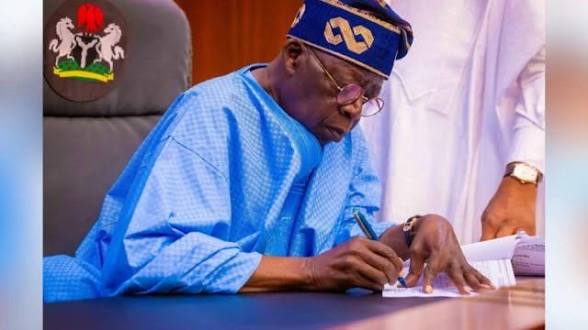
In the statement signed by presidential adviser Bayo Onanuga, the presidency said Tinubu considered the savings made by passengers the ultimate measure of the CNG programme. Tinubu identified state governments and transport operators as partners. It also linked the buses to investment in refuelling, including mobile units and a presidential directive for additional infrastructure. The point of bringing these elements together is straightforward. A bus with an attractively low fuel bill still needs somewhere convenient to buy its fuel, an operator willing to run it and customers who can reach it.
The immediate deadline is an arrival deadline. There is a practical difference between a vehicle reaching Lagos, clearing the necessary procedures, receiving its equipment, passing inspection, being assigned to a route and collecting its first paying passenger. A programme can meet the first deadline and leave commuters waiting for the last one. A photograph at the port would establish an important fact. The timetable at a bus stop would establish a different one. Citizens are entitled to look for both.
There is a political advantage to giving a date and a quantity. In a debate otherwise crowded with claims about gradual recovery and future prosperity, people can count buses. The Tinubu administration also takes on a corresponding risk. A project introduced with the figure of 300 will often be judged against 300 even if procurement, assembly and deployment take place over several years. Publishing the stages separately would make the accountability fairer to both the government and the people paying for the service.
What a 40 per cent reduction would mean to one passenger
Consider an illustrative fare of ₦1,000 for a single journey. A 40 per cent reduction takes it to ₦600. On two journeys a day for 22 working days, that would save ₦17,600 a month. That is arithmetic, not a forecast of any Nigerian route price. It explains why Tinubu has attached such prominence to fares. An apparently modest difference at the bus door can accumulate into money that buys groceries, pays part of a school bill or allows a household to stop borrowing before payday.
Now add a feeder journey. Suppose the same passenger spends ₦400 getting from home to the main road each morning and another ₦400 getting home at night. The original one way trip cost ₦1,400. Once the trunk fare falls, it costs ₦1,000. The saving remains ₦400 each way, but it represents about 29 per cent of the original total. Both the programme manager who reports a 40 per cent fare cut and the commuter who reports a smaller household saving can be telling the truth about the same journey.
Time introduces another cost. If the cheaper bus leaves a passenger standing for an extra hour, somebody who is paid by the day may lose more than the fare difference. A parent who has to collect a child before a particular time may rationally pay more for a faster alternative. At the other extreme, a reliable departure can be valuable even where the fare saving is small. Tinubu’s transport policy, judged only by the number printed on a ticket, can miss much of what makes a service affordable.
This also explains why the baseline needs a date. A journey might cost a different amount in the morning peak, at midday and after rain. Comparing the highest observed price before a programme with the lowest advertised price afterwards produces an excellent headline and a poor evaluation. Record the route, distance, time, vehicle type and actual price paid. Repeat the exercise over several weeks. An independent observer should be able to reproduce the claimed saving without borrowing the minister's calculator.
Cheap fuel has to survive an expensive working day
Compressed natural gas is one part of a bus operator's costs. The operator still has to pay the driver, maintain the vehicle, replace tyres, finance the purchase, manage the depot and cope with interruptions. A cheaper energy source can make lower fares economically possible. How much of that saving reaches passengers depends on what happens to the rest of the bill and how the service agreement distributes the benefit. A lower fuel price and a lower fare are connected by a contract and a working business.
Take a bus with plenty of seats but very few passengers on its return journey. Fuel and staff costs continue in both directions. A well used route spreads those costs across more journeys. A route serving a smaller community may require explicit support if the government wants the same affordable fare. Left to maximise ticket income alone, an operator has a reason to choose the crowded corridor. A public service designed around access may have good reasons to make a different choice and should say who will pay for it.
A similar calculation applies to traffic. A bus stuck in a queue cannot complete its next run, whatever fuel is in the tank. The people at the next stop then experience the congestion as an absence of buses. Extra vehicles might help, but a blocked station entrance or a junction that holds every vehicle for twenty minutes will consume a substantial part of the investment. A state government can sometimes do more for the advertised timetable by managing one troublesome intersection than by ordering another batch of vehicles.
The agreement therefore presents a test of cooperation between different levels of government. Tinubu’s government can negotiate supply and support infrastructure. Local decisions about stops, enforcement, depots, street space and route design determine much of the passenger experience. A breakdown in that relationship is unlikely to announce itself to the commuter as a constitutional issue. It will arrive in the usual disguise, namely a long queue and somebody explaining that the person responsible works somewhere else.
Why Ibadan matters to Tinubu’s industrial promise

Local assembly at the former Leyland facility is a different undertaking from bringing in the first batch of complete buses. A functioning assembly operation can employ technicians, develop local suppliers and create a base for repairs. It requires orders, tools, trained people and dependable access to components. The State House describes the industrial benefits as goals. The existence of a named site gives citizens and the business community a concrete place to follow the progress of those goals.
The phrase local assembly can cover a wide range of activity. An operation may begin with imported kits and limited work at the receiving plant. Over time it may develop greater local responsibility for fabrication, wiring, interiors, testing and repair. The balance matters because a bus can acquire a Nigerian assembly label while many costly components still have to be bought abroad. There is no disgrace in an industry beginning with imported equipment. There is considerable value in knowing what the next stage is expected to add.
One useful industrial measure would be the proportion of maintenance problems resolved locally without waiting for a part or a visiting specialist. Another would be the number of technicians who gain a recognised skill and remain in productive work after the initial order is complete. A third would be the time it takes to return a disabled bus to service. These are less glamorous numbers than the value of an investment agreement. To a commuter stranded beside a stationary vehicle, they are much closer to the point.
Ibadan also raises a question about the relationship between manufacturing and demand. A plant needs a pipeline of orders that extends beyond a single political announcement. States and private operators contemplating purchases need predictable financing and confidence that the vehicles can be supported throughout their working lives. If those two sets of expectations reinforce one another, the factory can help make the transport service durable. If each side waits for the other to demonstrate commitment, an impressive production line can spend a long time posing for photographs.
Where will the buses in Tinubu’s programme fill up?

Refuelling infrastructure appears prominently in Tinubu’s statement. The public discussion would benefit from a distinction between infrastructure directed, equipment delivered, stations commissioned and stations reliably available to operators. A procurement list can count a piece of equipment as supplied. A driver needs to know its location, opening hours, queue, compatibility and working status. Where the station is relative to the route matters almost as much as whether it exists.
Imagine a fleet finishing its morning run in one district and having to travel far across the city for fuel. That movement consumes fuel, staff time and hours the vehicle might otherwise spend carrying passengers. An operator might sensibly schedule refuelling outside the peak, but that depends on storage, staffing and access at the depot. A strategically placed facility can make a smaller fleet more productive. Scatter equipment without consulting operators and a larger number on a map may deliver a smaller practical benefit.
A mobile refuelling unit can provide flexibility while permanent infrastructure develops. Its contribution still depends on supply, maintenance, safe operation and a reliable schedule. A transport manager who knows exactly when the unit will be available can organise the fleet accordingly. A unit that appears irregularly forces the manager to keep reserves, postpone journeys or send vehicles somewhere else. Effective public investment includes the arrangements that make the equipment predictable long after the launch event has ended.
People living near depots also have a legitimate interest in how new facilities are planned and supervised. Local consultation can identify access problems, traffic conflicts and concerns that should be addressed before operations begin. Offering clear information about who is responsible and how residents can report a problem builds the ordinary trust needed for infrastructure to function. It also prevents a disagreement about one location from becoming a referendum on the entire technology.
The routes Tinubu’s bus programme could overlook

A frequent service on a busy metropolitan corridor can benefit large numbers of people quickly. It is an attractive place to demonstrate that an investment works. Yet a national programme that measures success mainly by total passengers carried will repeatedly reward crowded urban corridors. Smaller towns, peripheral settlements and routes used outside the conventional working day will struggle to compete for attention. A decision in favour of the busiest routes may be defensible. It is still a decision about who benefits first.
Shift workers make the issue concrete. A bus that runs cheaply between eight in the morning and six in the evening does little for a cleaner who begins work before seven or a health worker travelling after a late shift. Traders carrying goods have different needs from office commuters with small bags. Passengers with limited mobility need usable steps, boarding arrangements and enough time to get on. A service that is affordable in theory may remain unavailable to precisely the people for whom daily transport is most difficult.
Women travelling with children often make journeys with several stops. Someone may take a child to school, continue to a market and return by another route. An evaluation designed around the direct trip from one major terminal to another could miss those journeys almost entirely. A small survey at a variety of stops, at different times of day, would tell planners more than another round of photographs from the central terminus. Listening to passengers is a cheap form of engineering research.
There is also the question of the existing operators. A new subsidised service on a high demand corridor may improve prices and reliability. It may also change the economics of smaller connecting routes, depending on how operators and passengers respond. The practical objective should be an affordable network in which people can complete whole journeys. That requires attention to transfers, station access and the information available at each end. A very successful route can coexist with a frustratingly unsuccessful commute.
What Tinubu means by affordable
Tinubu’s administration is trying to connect a visible project to the intensely personal experience of living costs. Transport has unusual political weight because it appears in a household budget several times. A family buys journeys directly and pays indirectly for the movement of food, supplies and services. A cheaper commute can offer immediate relief even where other prices remain high. A few cheaper commuter corridors, however, do not automatically lower the cost of every delivery that eventually reaches a market stall.
Nigeria's latest inflation figures help explain the difficulty. Financial Markets Dealers Association analysis of the October data put annual headline inflation at 14.06 per cent, down from 14.63 per cent in September. In the same analysis transport costs rose 1.86 per cent from September to October. Those figures describe different comparisons, one across a year and the other across a month. Together they illustrate how a family can hear that inflation is easing and still pay more to travel than it did the previous month.
This is fertile ground for bad political argument on both sides. A supporter can point to a cheaper ticket on one route and dismiss every household complaining of hardship. A critic can point to an expensive journey outside the programme and declare that the participating route has achieved nothing. A serious assessment can accommodate both experiences. It asks where the price changed, whether the service remained usable, how many people relied on it and what the programme cost to deliver.
Public money deserves a similarly careful discussion. If a government supports the capital cost of a bus or pays an operator to provide a socially useful service, that can be a legitimate policy choice. The amount, duration, conditions and beneficiary should be visible. A discount sustained by good operating economics is different from one dependent on annual budget support. Both can serve a purpose. Confusing them makes it harder to decide whether a programme can expand and what expenditure elsewhere might be needed to sustain it.
A public scoreboard a commuter could actually use
The starting point would be a list of participating routes with both terminals, intermediate stops, operating days, published fares and the date of the last update. A person should be able to use that list to plan an actual trip. Add the responsible operator and a way to report a discrepancy. If the fare at the stop differs from the fare on the website, the passenger needs somewhere to take the question other than a social media argument with a government spokesperson.
A second set of figures would cover fleet availability and frequency. Of the buses received, how many entered service? How many were available on an ordinary weekday? How long did passengers typically wait during the morning and evening peaks? How many scheduled departures did not run? These measures reveal different problems. A fleet can have excellent mechanical availability and still offer poor service because the timetable is unrealistic. A well designed route can suffer because too many vehicles are awaiting repairs.
A third set would follow the passenger's money. Publish fare comparisons against a clearly dated baseline and show whether the figures come from tickets, operator reports or independent observations. Averages are useful, but the range is informative too. If one corridor produces spectacular savings and several barely change, that is a reason to investigate the conditions on the successful route. A government willing to publish uneven results has a better chance of learning from them than one committed to making every chart tell the same story.
Finally, report complaints and corrections. A fare breach that is investigated and resolved quickly provides evidence that the system works. Hiding complaints can make an office look efficient while leaving passengers to pay for its tidiness. Tinubu’s programme would gain credibility from an occasional plain statement that a route missed its target, followed by a description of what changed. Anyone who has used public transport for a week already knows that perfect performance exists principally on posters.
What to watch by the end of December
Tinubu has given Nigerians a near term milestone. The first 100 vehicles are expected in Lagos by the end of December. Check that milestone against a delivery record. Check the next one against actual deployment. Follow the Ibadan undertaking through the work done at the plant, the people trained there and the vehicles that emerge. Follow the fare promise at the places where passengers change hands with the conductor or tap a ticket. The figures refer to different events and should be allowed to tell different stories.
For an administration asking voters to judge its reforms by what eventually reaches them, that is a substantial political commitment. A passenger who saves money on a dependable service hardly needs a campaign speech explaining the benefit. A passenger who hears about an expensive fleet and still cannot get home affordably is unlikely to be persuaded by the horsepower either. Between those experiences lies the work of the next several years, much of it in depots, state transport offices, workshops and bus stops far from the room where the agreement was signed.
The most revealing sentence in the account issued on Tinubu’s behalf is its insistence that Nigerians' actual transport savings should determine success. It gives the public permission to ask a wonderfully unceremonious question of an industrial project, an infrastructure programme and a political promise all at once. What did you pay this morning? When enough passengers on enough routes can answer with a smaller number, and can rely on paying it tomorrow, the Tinubu administration will have evidence more persuasive than any photograph of a new bus.
Reporting draws on the State House announcement, Punch’s account of the signing and the FMDA October inflation brief. More political coverage.
The conversation
0 comments
Join the discussion with a thoughtful response.