

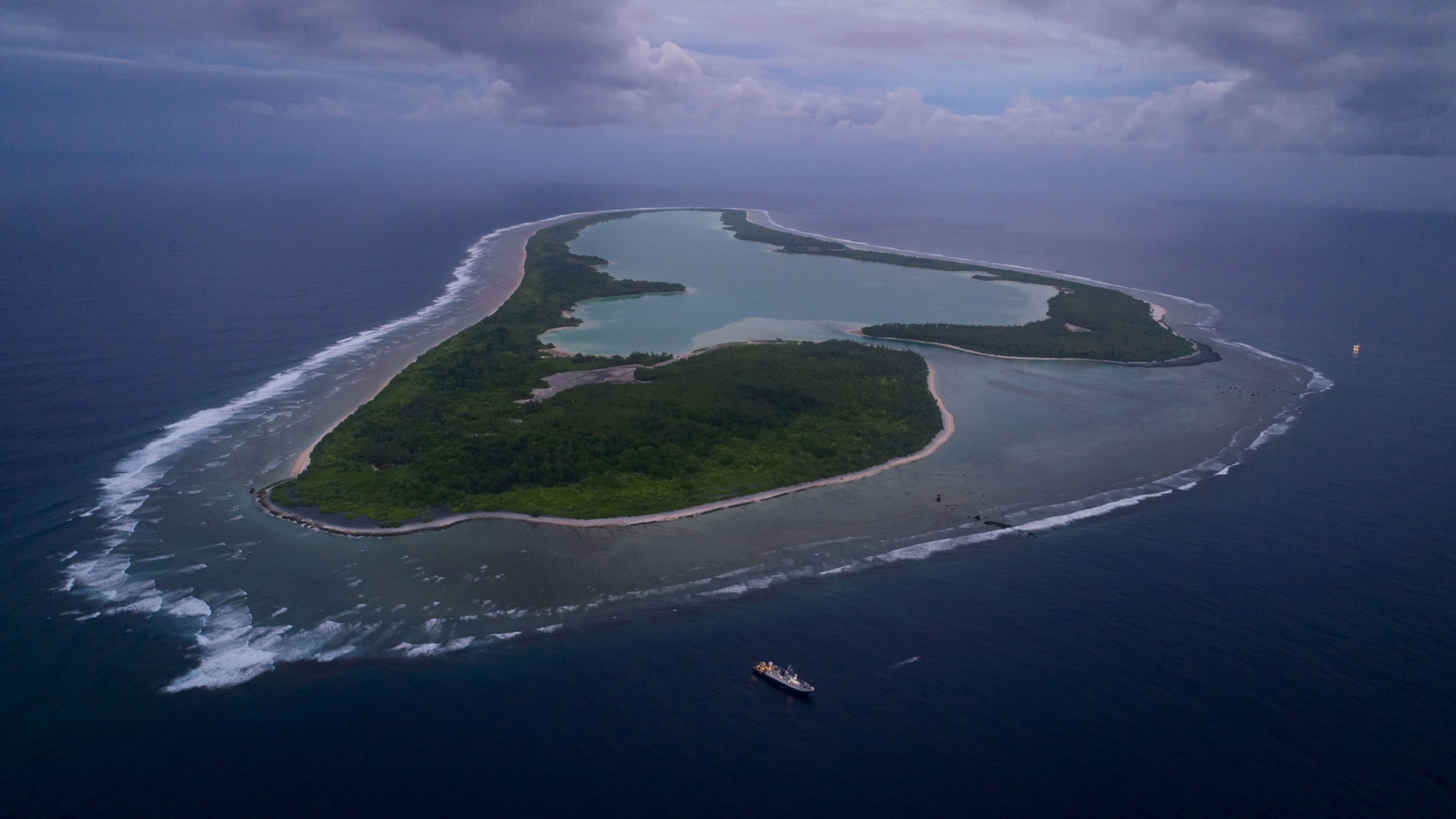
For nearly a century, the disappearance of Amelia Earhart and navigator Fred Noonan has invited a familiar cycle: an image appears to show a clue, a new expedition travels to the Pacific, and the evidence is tested against the story people hope to find. The latest result is unusually clear on one point. A Purdue University and Archaeological Legacy Institute team says the Taraia Object, a shape seen in satellite imagery on Nikumaroro, was most likely a collection of large trees deposited along the atoll’s sandspit, not wreckage from Earhart’s Lockheed Electra.
The expedition reached the site in October after the team spent five days at sea from Tarawa. By then, much of the material had broken apart or washed away. Researchers recovered a Y-shaped remnant with a reflective surface, but testing indicated the shine came from a carbonate coating made of coral sand. That finding answers the narrow question the team set out to test. It does not answer what happened to Earhart and Noonan.
A failed identification still produces evidence
Among the expedition’s other finds was a steel tube about 30 inches long, recovered from the lagoon near the Taraia Peninsula. It has not been identified as part of Earhart’s aircraft. The team says the objects will be studied further because they may help explain how debris entering the lagoon can be carried across it and deposited on the peninsula. The distinction matters: an artifact found at the island is not automatically an artifact from the missing plane.
The broader castaway hypothesis remains a theory advanced by the International Group for Historic Aircraft Recovery and others. Supporters point to radio bearings, an old photograph, and objects found on the island. Each item has its own evidentiary limits, and none has yet produced a definitive identification of the Electra or its crew. The latest result narrows one proposed explanation for one visual anomaly. It neither proves nor disproves every other line of inquiry.
Why the mystery keeps returning
Earhart and Noonan left Lae, Papua New Guinea, on July 2, 1937, bound for Howland Island. The planned leg was roughly 400 miles, and the aircraft vanished before reaching its destination. The U.S. search covered a vast area of ocean, but no confirmed wreckage was found. Nikumaroro entered later investigations as a possible landing place, in part because of reports and artifacts that researchers have tried to re-examine.
The honest ending to this expedition is therefore not a dramatic revelation. A promising shape was tested and explained by natural debris. A separate metal tube remains under study. The larger question survives because the evidence is still incomplete. In a mystery built from fragments, ruling out a fragment matters, even when it does not give the world the ending it wants.
Sources
Image credits
Cover image: Purdue University Libraries, Archives and Special Collections, George Palmer Putnam Collection of Amelia Earhart Papers. In-article image: Rob Lyall, National Geographic.
The conversation
0 comments
Join the discussion with a thoughtful response.