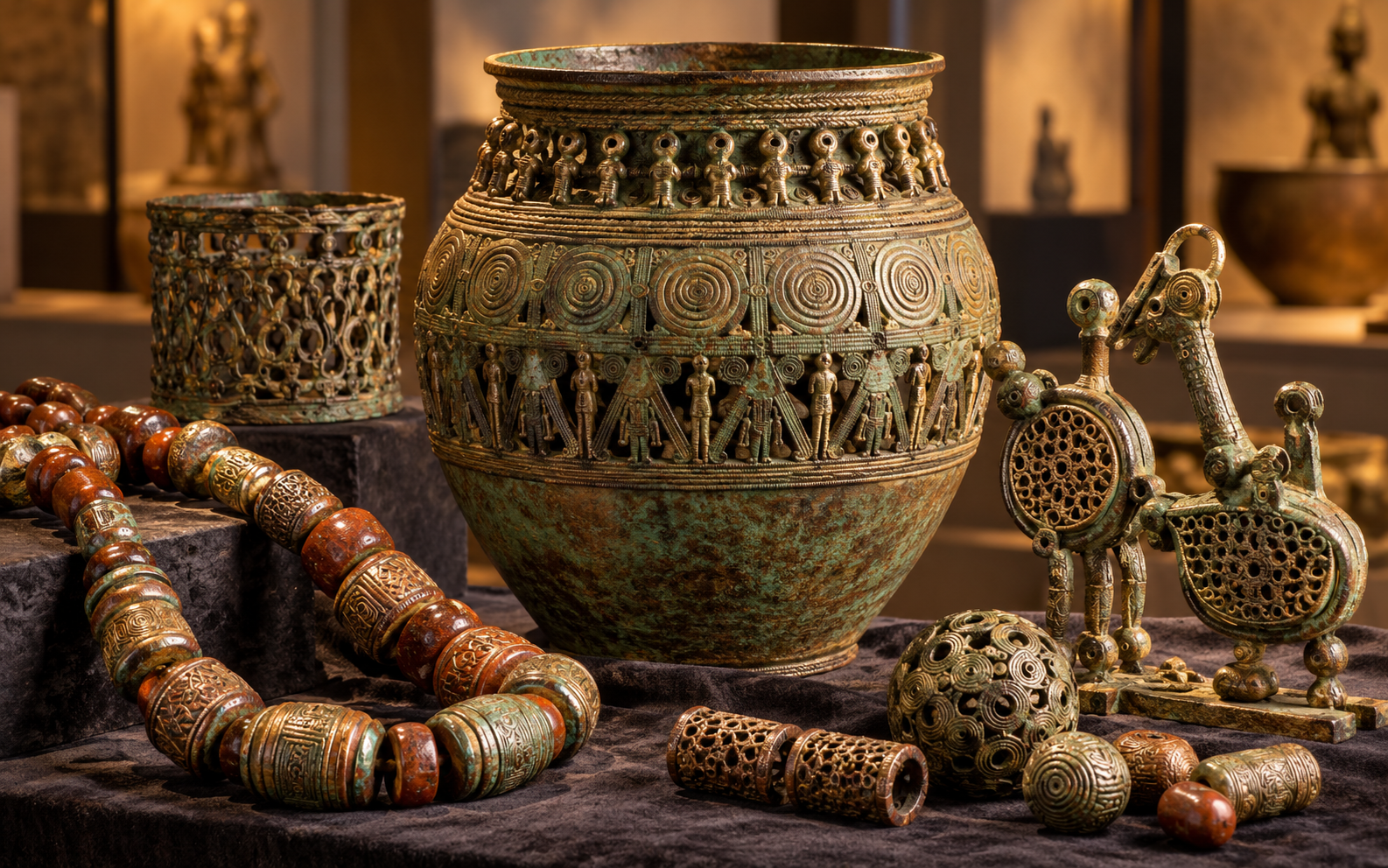

A workshop of extraordinary precision
The bronzes from Igbo-Ukwu are among the most technically ambitious metalworks found in West Africa. Excavations at the Nigerian site produced ritual vessels, regalia and other objects made from bronze or leaded bronze, many covered in fine detail. The Metropolitan Museum of Art notes that their casting and ornament make them some of the most inventive works of their kind. Their achievement is not only the amount of metal used; it is the command of form, texture and intricate surface design.
The date is important—and still debated
The site is often introduced as ninth-century Igbo-Ukwu, but that dating is not a simple final answer. The Met’s essay states that the date remains controversial, a caveat that matters because chronology shapes how historians understand the people, technology and networks involved. Archaeologists have compared the material with other evidence and revisited interpretations as methods improve. A good account can describe the commonly cited period while being clear that researchers continue to discuss it.
Lost-wax casting and creative control
Many objects were made using lost-wax casting, a process in which a wax model is shaped, covered in a mould, then melted out so molten metal can occupy the space. The method allows a maker to produce complex shapes and fine details, but success depends on experience at every stage: preparing the model, building a suitable mould, controlling heat and finishing the cast. The results suggest not a one-off experiment but a body of craft knowledge refined by specialist makers.
Objects built for ritual and authority
The excavated material includes vessels and regalia, which indicates that metal objects were part of meaningful social settings rather than everyday utensils alone. Their purpose is interpreted through archaeological context, form and decoration. It is tempting to attach a complete ritual script to every item, but the evidence does not always let us do that. What we can say is that the objects required resources, expertise and a community capable of recognizing their significance.
Local craft, long-distance connections
Igbo-Ukwu’s bronze work has prompted questions about how materials, ideas and technologies moved through West Africa. Finds such as glass beads and imported materials provide clues to wide connections, but they do not make the workshop a copy of a distant centre. The strongest reading holds both points together: makers drew on a world of exchange while producing objects with their own unmistakable formal language. The region’s history is not a choice between local invention and outside contact; it is often the story of both.
What the surviving pieces can teach
Close looking reveals patterns that are difficult to appreciate in a brief caption: linked loops, fine projections and surfaces that catch the light differently from one angle to another. Conservation and museum photography help make these details visible, while archaeological reports provide essential context. A museum display should also be read with questions in mind: where was the object found, how was it dated, and which claims remain contested? The answers keep wonder connected to evidence.
History with room for discovery
Igbo-Ukwu challenges the idea that complex metallurgy arrived in West Africa only through external intervention. Its objects attest to African technical achievement and artistic choice. At the same time, the chronology and wider context are not closed subjects. Further research can refine what is known about the workshop, the communities who supported it and the routes by which materials circulated. The most compelling history does not need to pretend that every answer is settled; it can show how the evidence grows.
Sources
The Metropolitan Museum of Art: Igbo-Ukwu (ca. 9th Century) · National Commission for Museums and Monuments: conservation project