
November 1 in history is a study in striking contrasts: a Renaissance ceiling was unveiled in a papal chapel, one of Europe’s most devastating earthquakes struck Lisbon, and a Cold War test changed the scale of nuclear weapons. Each event fell on All Saints’ Day in its own century, but the date’s coincidences should not obscure the very different human stories behind it.
1512: Michelangelo’s ceiling enters public life
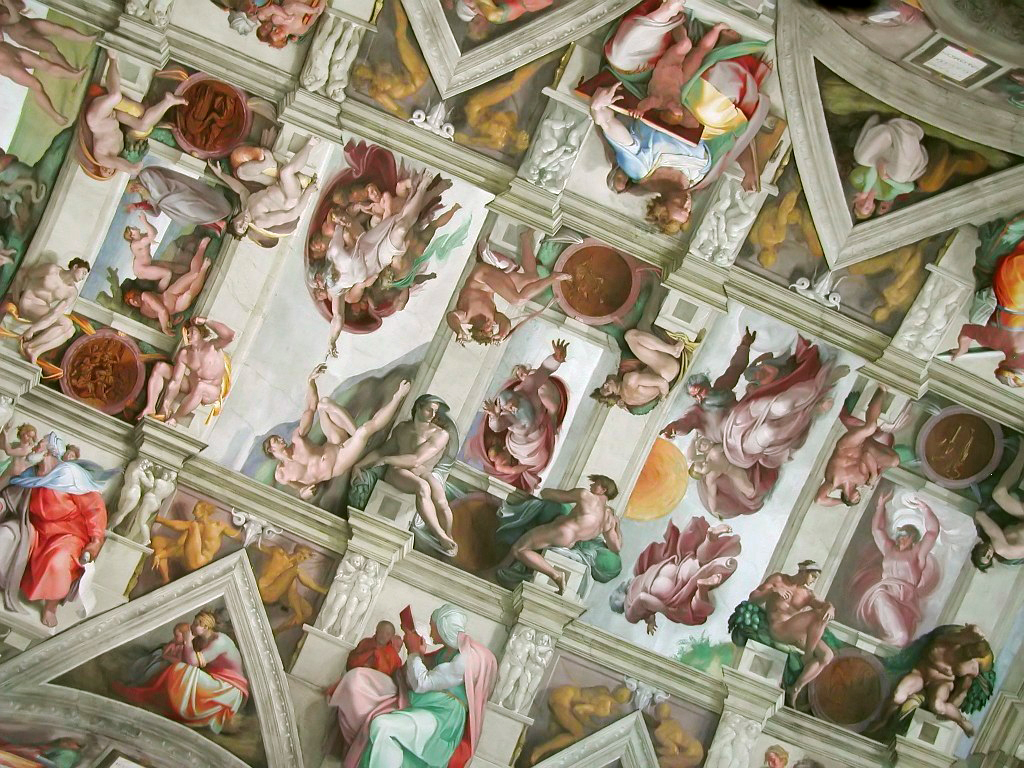
By the end of October 1512, Michelangelo had completed the immense ceiling fresco he painted in the Sistine Chapel for Pope Julius II. On November 1, Julius celebrated Mass in the chapel, inaugurating the work on the Feast of All Saints. The date marks the ceiling’s first public unveiling in the Vatican’s own historical account.
The fresco transformed a difficult architectural surface into a sequence of biblical scenes, prophets and figures that invite the eye to travel across the vault. It was not made in a single effortless burst. Michelangelo worked for years on scaffolding, negotiating the scale of the space, the demands of fresco painting and the politics of a papal commission. The celebrated image of the Creation of Adam is only one part of a much larger programme.
Its first audience encountered more than a famous image. The ceiling placed artistic invention inside a working religious space and made a complex visual argument about creation, humanity and sacred history. Five centuries later, conservation teams still manage the effects of dust, humidity and visitor pressure on the chapel’s painted surfaces.
1755: Lisbon’s morning becomes a European rupture
At about 9:40 a.m. on November 1, 1755, a powerful earthquake struck off Portugal’s Atlantic coast. The shaking damaged Lisbon and other communities; a tsunami followed along parts of the coast, and fires spread through the capital. The disaster landed on a major religious feast day, when churches were full and candles were burning, worsening the catastrophe in some places.
Exact magnitude and death toll estimates remain uncertain because there were no modern instruments or consistent records. Historians and geologists work from contemporary accounts, damage patterns, tsunami deposits and later scientific models. The often repeated figure of roughly 8.5 to 9 is an estimate, not a measurement from a seismograph. Losses were catastrophic across the region, and Lisbon’s destruction shook assumptions about divine protection, urban planning and the nature of natural disasters.
Reconstruction became an ambitious state project. Under the leadership of Sebastião José de Carvalho e Melo, later the Marquis of Pombal, the central city was rebuilt with a more regular street plan and new construction methods intended to withstand future shaking. The earthquake also entered philosophical debate across Europe: how could a disaster of this scale be reconciled with ideas about providence, morality and human suffering?
1952: Ivy Mike and the new scale of danger
On November 1, 1952, local time in the Marshall Islands, the United States detonated “Mike,” the first full-scale thermonuclear device in Operation Ivy. It was a vast experimental installation, not a practical bomb that could be carried by an aircraft. The test at Enewetak Atoll vaporised the small island of Elugelab and demonstrated a weapon design in which fusion reactions produced energy on a scale beyond earlier fission bombs.
The date can appear as October 31 in some US government records because the event occurred across the international date line and publications use different time conventions. The test’s local date was November 1. That time-zone detail is a useful reminder that a historical event can have more than one calendar label without the underlying sequence changing.
Ivy Mike was a scientific and military milestone, but describing it only as a technical breakthrough leaves out the cost. The test contributed to an arms race that transformed strategic planning and placed Pacific communities under the consequences of nuclear testing. The history of the device includes both laboratory achievement and the people, lands and ecosystems exposed to the programme.
What these anniversaries ask of us
Placed side by side, the three anniversaries show how a date can hold cultural achievement, natural catastrophe and human-made peril. The Sistine Chapel ceiling reminds us that art is shaped by institutions and sustained by care. Lisbon shows how disaster can redraw a city and unsettle the ideas people use to explain suffering. Ivy Mike illustrates how technical capacity can outpace the public conversation about risk and responsibility.
The point of a retrospective is not to force a shared meaning onto unrelated events. It is to ask what records survive, whose perspective they preserve, and what later generations choose to remember. On November 1, that means looking beyond the familiar masterpiece, the earthquake headline or the mushroom cloud to the lives and decisions surrounding each event.
Sources: Vatican Museums, Sistine Chapel ceiling history; Natural Hazards and Earth System Sciences, 1755 Lisbon earthquake research; U.S. Department of Energy OpenNet, hydrogen bomb history; U.S. Army, Operation Ivy account.
Historical note: dates reflect the local event date where stated; magnitude, casualties and technical classifications rely on retrospective evidence and may vary across sources.
November 1 in history: why these anniversaries still matter
Looking back on November 1 in history reveals more than a list of dates: the record brings art, disaster and nuclear risk into one conversation about memory and responsibility. The story of November 1 in history also shows why context matters, from local calendars to uncertain casualty estimates.
For readers revisiting November 1 in history, the Vatican’s account of the chapel offers a primary reference. Explore more researched retrospectives in the Astra Planet History archive.
The conversation
0 comments
Join the discussion with a thoughtful response.