
Astra Historical Desk - Special Feature March 2025
Written By Knight Fredel
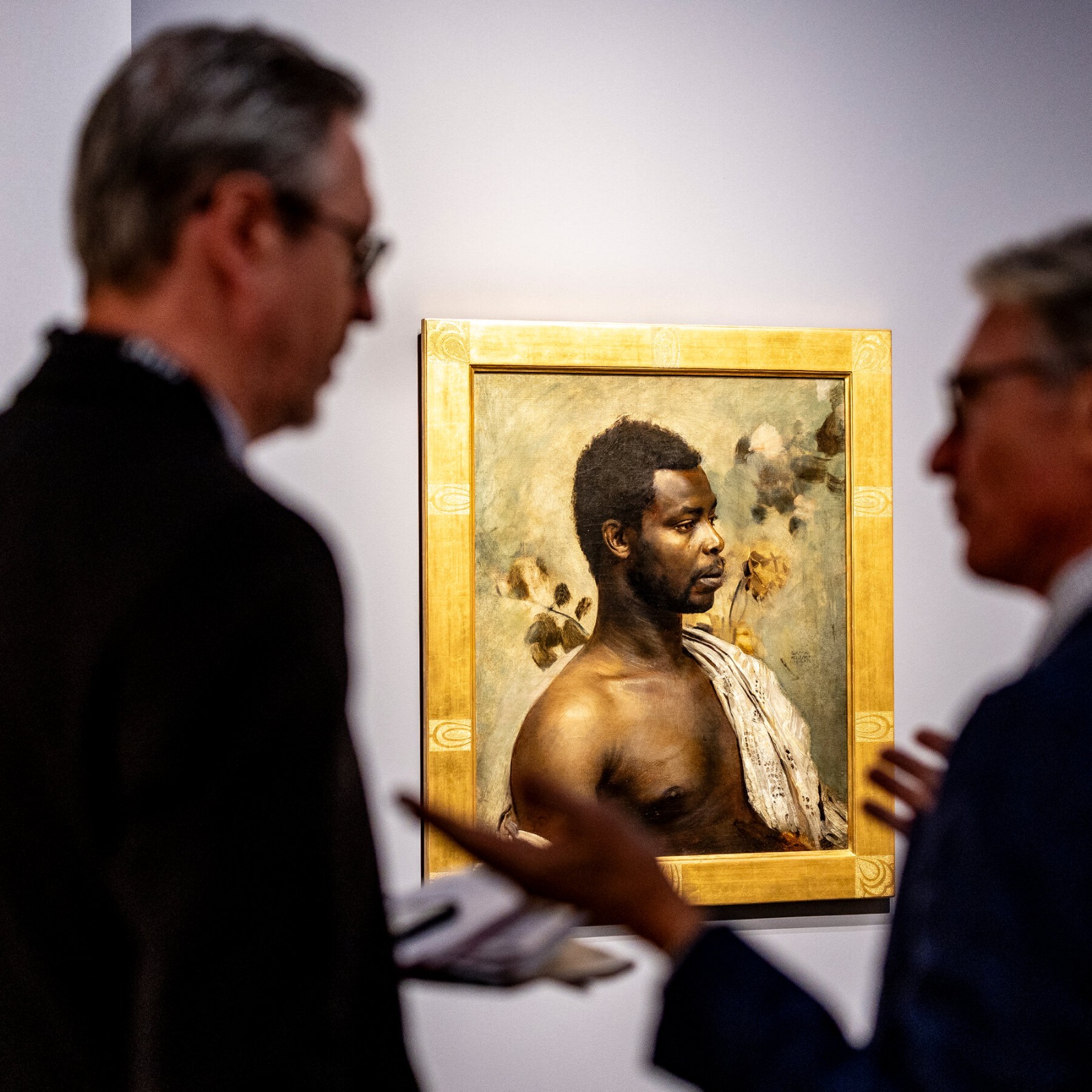
For decades, the art world whispered about its existence—an elusive portrait by the legendary Gustav Klimt, believed to be lost to time and turmoil. A painting so enigmatic that, like an urban legend, it was spoken of in hushed tones, appearing only in aged black-and-white auction catalogues and the memories of those who swore it once graced a gallery wall. But now, against all odds, the Portrait of Prince William Nii Nortey Dowuona has reemerged from the shadows, causing a sensation that has rippled through museums, auction houses, and the hearts of art lovers worldwide.
This unexpected revelation was nothing short of a Hollywood-worthy plot twist. The once-lost portrait has not only resurfaced but is now commanding a jaw-dropping price of €15 million ($16.3 million) at the TEFAF art fair in Maastricht, Netherlands. And like any good mystery, its rediscovery is a story riddled with intrigue, historical depth, and a touch of serendipity.
An Accidental Treasure
The story begins with an unassuming couple who, like modern-day treasure hunters, unknowingly walked into the Viennese gallery Wienerroither & Kohlbacher carrying what seemed to be an old, heavily soiled painting. At first glance, it looked like nothing more than a dusty relic—a piece so neglected that even the most optimistic of art dealers would have been hesitant to get their hopes up.
"It was a huge surprise for us," Alois Wienerroither, managing director of the gallery, admitted. Despite his 25 years of Klimt expertise, he didn't immediately recognize the masterpiece hiding beneath layers of grime. In its disheveled state, the painting didn’t look remotely like the work of the legendary Viennese artist. But then, like a scene from an art restoration documentary, the grime was carefully removed—and there, emerging like a phoenix from the ashes, was Klimt’s long-lost West African prince.
Klimt’s Unlikely Muse
To understand the significance of this discovery, one must journey back to Vienna in 1897, a city teeming with avant-garde ideas and artistic rebellion. Gustav Klimt, already an established artist, had just co-founded the Vienna Secession, a movement that sought to break free from the rigid constraints of traditional history painting. This was the birth of Viennese Art Nouveau, and Klimt was its leading visionary. His works, often abstract, sensuous, and gilded with gold, challenged conventional beauty and perception.
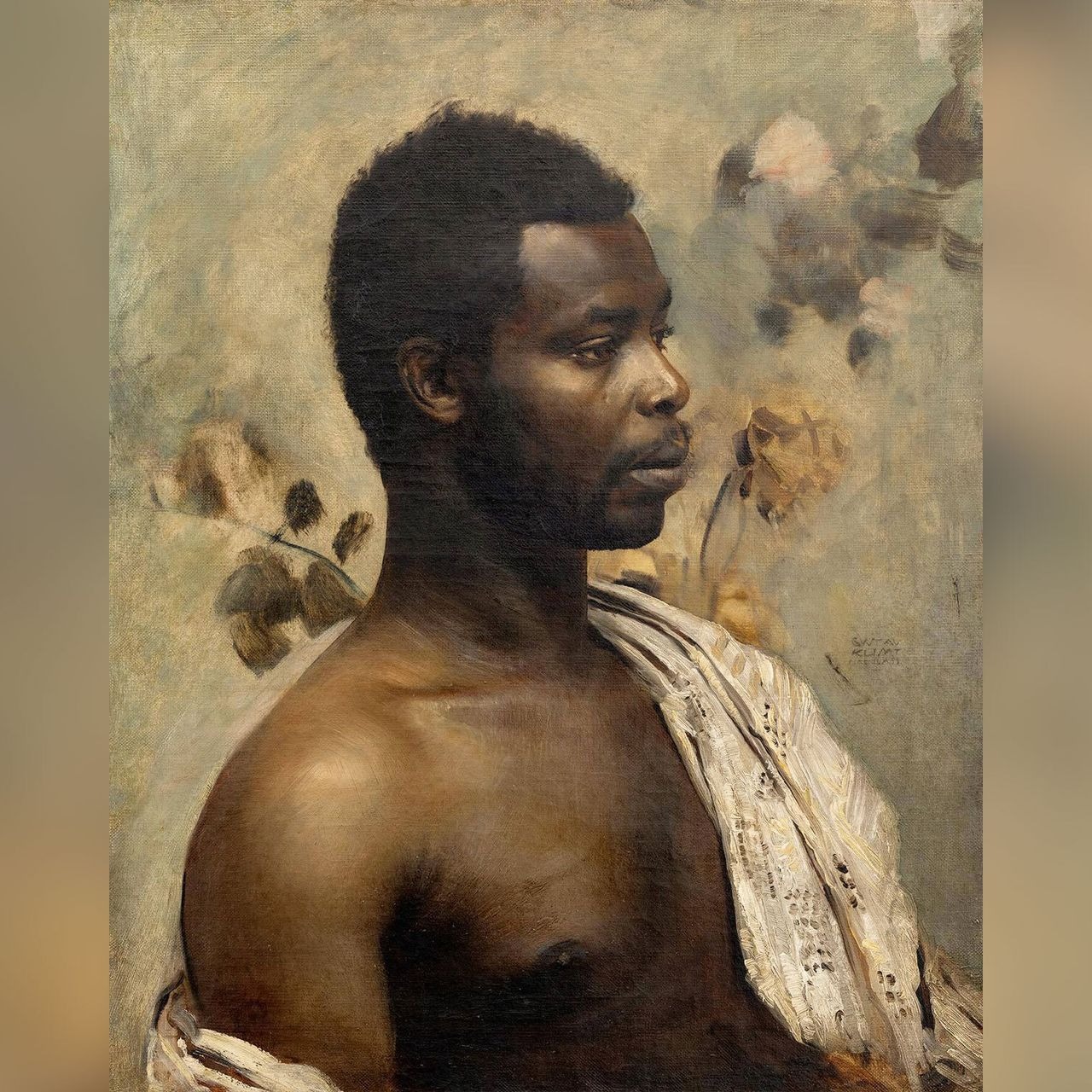
Yet, the Portrait of Prince William Nii Nortey Dowuona stands out among Klimt’s walls of artworks. Painted during his artistic transition, it carries traces of realism, setting it apart from his later, more symbolist works like The Kiss and Portrait of Adele Bloch-Bauer I (a.k.a. The Woman in Gold). The background, bursting with floral elements, hints at Klimt’s evolving style, drawing an intriguing parallel to his later Portrait of Sonja Knips, another piece featuring a subject enveloped in nature’s embrace.
But how did a West African prince end up as a subject in Klimt’s Vienna?
A Tale of Human Zoos and Imperial Spectacles
The answer is unsettling. According to art historian Alfred Weidinger, the prince likely posed for Klimt during one of Vienna’s notorious ethnographic exhibitions, also known as Völkerschauen. These exhibitions, which were appallingly popular in Europe at the turn of the 20th century, showcased people from different ethnic groups—often in degrading conditions—as curiosities for the so-called "cultured" European audience.
It’s a dark stain on history, a reminder of colonial voyeurism disguised as "anthropological interest." Such exhibitions often reduced individuals to mere spectacles, subjecting them to scrutiny much like animals in a zoo. Today, they are widely condemned as racist and exploitative, but at the time, they were a perverse fascination for European audiences hungry for "exoticism."
In 1897, Prince William Nii Nortey Dowuona, the nephew of the Osu King of Ghana, arrived in Vienna as part of such an exhibition. It was here that he crossed paths with Klimt and also posed for Austrian artist Franz Matsch, whose portrait of the prince now resides in the Musée National d’Histoire et d’Art in Luxembourg. Unlike Matsch, who adhered to traditional realism, Klimt’s portrayal was a fusion of individual dignity and artistic evolution, capturing not just a man, but a cultural turning point in art itself.
A Journey Through War and Time
After Klimt’s death in 1918, the painting entered a whirlwind of history’s most tumultuous events. It was last seen publicly in 1928, displayed at a Klimt retrospective. Then, it seemingly vanished—swallowed by the chaos of World War II and Nazi looting.
At the heart of this mystery lies Ernestine Klein, an Austrian woman who bought Klimt’s studio and may have purchased the painting at a 1923 auction. But tragedy struck in 1938 when Austria was annexed by Adolf Hitler’s Nazi regime. With her Jewish husband facing persecution, the Kleins were forced to flee, leaving everything behind. When they returned after the war, their belongings—including the portrait—were gone. The painting never resurfaced at any recorded auction, suggesting it changed hands privately, slipping through the cracks of art history.
Fast-forward to today, and this ghost of the past has finally found its voice again.
The Heirs, The Reunion, and The Future
The rediscovery of the painting isn’t just an art world sensation—it’s a family reunion in the making.
"We now know exactly who this prince was," said Wienerroither, excitement evident in his voice. Thanks to an incredible stroke of luck, Alfred Weidinger—while photographing modern-day African royalty—stumbled upon the descendants of Prince William Nii Nortey Dowuona in Ghana.
"They still have artifacts from their ancestor’s journey to Vienna," he revealed. The idea that tangible pieces of history, passed down through generations, still exist within the family adds a poetic symmetry to this story of rediscovery. Now, an extraordinary meeting is being arranged between the prince’s descendants and art historians, culminating in a 50-minute television documentary that will explore this mesmerizing tale.
An Art Reborn: A Masterpiece Of All Time

And now, after 127 years of mystery, scandal, war, and serendipity, the lost prince has finally come home.
The return of Portrait of Prince William Nii Nortey Dowuona is not just the reappearance of a lost painting; it’s a resurrection of a forgotten narrative, a bridge between past and present. Klimt, known for immortalizing Viennese high society, had also captured the quiet dignity of a prince from another continent—a moment in history preserved in brushstrokes and color.
A painting isn’t just pigment on canvas—it’s a portal to another time, another soul. And in the case of Klimt’s lost prince, it’s a reminder that even when history tries to erase a story, the truth will always find a way back to the light.
WRITEN BY KNIGHT FREDEL
All Rights Reserved, Astra Planet Magazine:
Powered By Awake Afraka Magazine
X-rated videos represent a genre of visual media designed for individuals over 18.
They can function for sexual education as well as for recreation.
Yet, it is important to tell apart among authentic relationships and staged depictions.
Conscious engagement involves respecting personal limits and opting for legitimate providers.
mom son incest porn
Powerful writeup… I love arts .. this is so good 💯😊