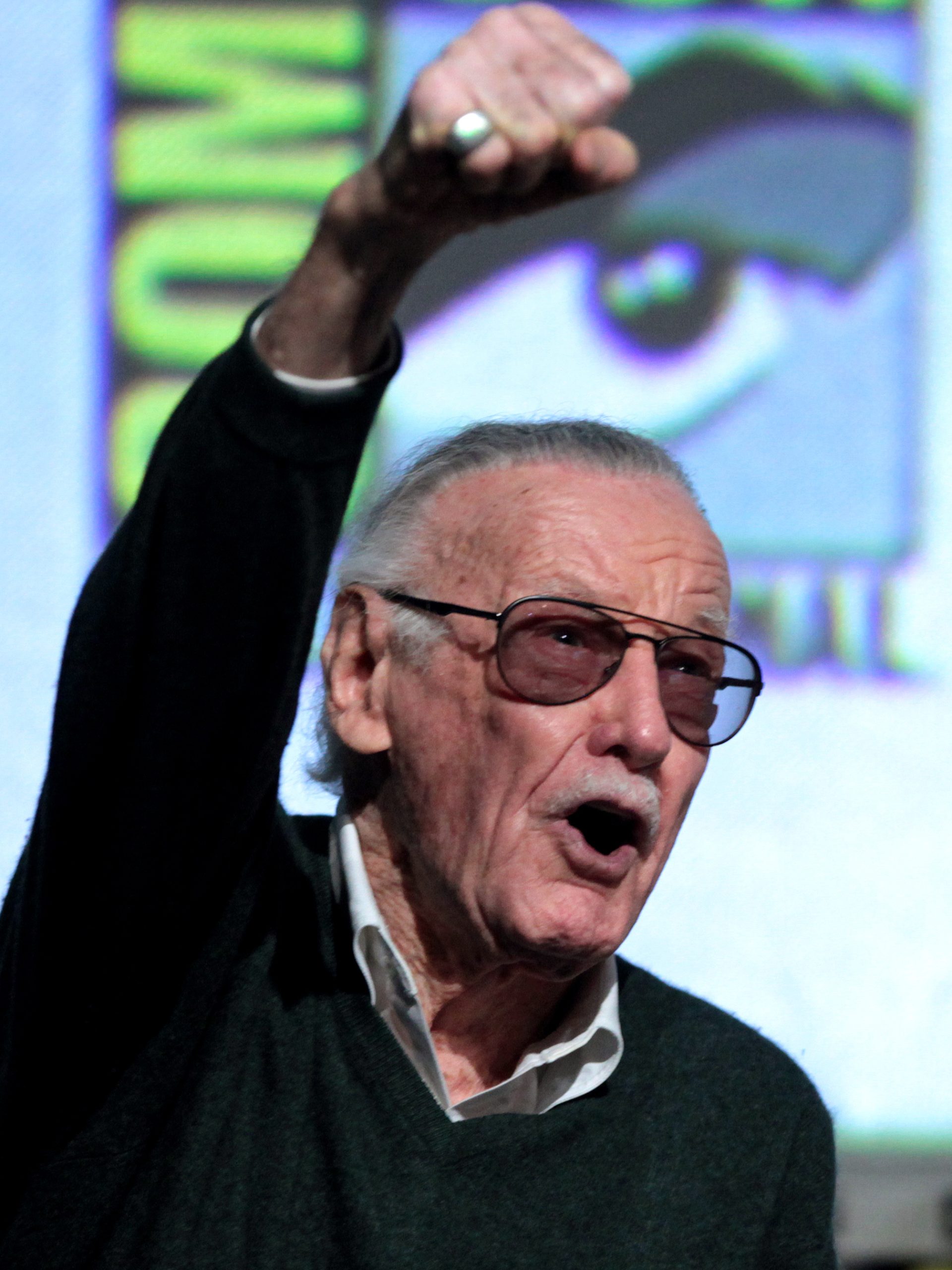

Stan Lee Marvel cameos became a beloved cinematic ritual. Why does he appear in so many Marvel movies? Filmmakers invited the writer and editor who helped shape Marvel Comics to make brief guest appearances. What began as an affectionate nod became a running audience game, crossing the X-Men, Spider-Man and Avengers franchises even while different studios controlled their film rights.
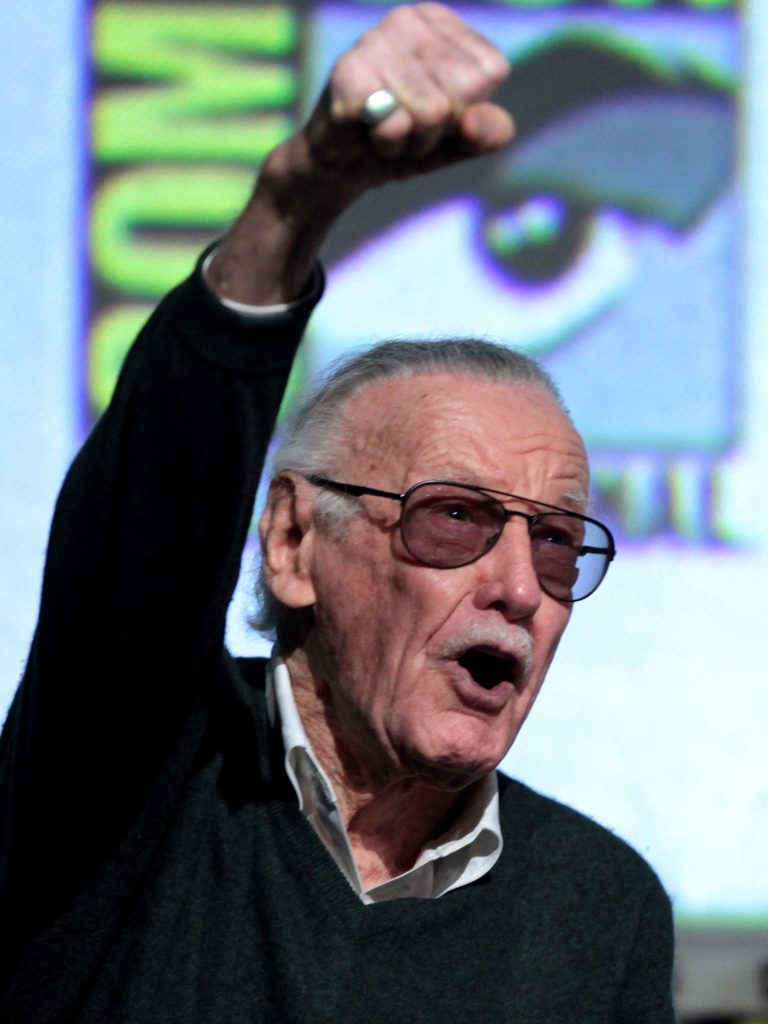
Picture it: the sky is misbehaving, the world is ending, and somebody’s grandfather has wandered into the frame to look as though the production forgot to warn him about the apocalypse. That man is Stan Lee. Once you learn to spot him, a Marvel movie offers two simultaneous attractions: the advertised superhero story and a tiny, increasingly elaborate search for a cheerful fellow in tinted glasses.
Who was Stan Lee, and why did directors keep inviting him back?
Born Stanley Lieber in 1922, Lee was a writer, editor and publisher whose exuberant voice helped define Marvel Comics. He worked alongside artists and fellow storytellers, notably Jack Kirby on the Fantastic Four and X-Men and Steve Ditko on Spider-Man and Doctor Strange. Those characters did not spring fully armoured from one man’s forehead. Comics are collaborative, and the pencil can invent a personality as decisively as the script. Declaring Lee their sole creator would do his colleagues a spectacular disservice.
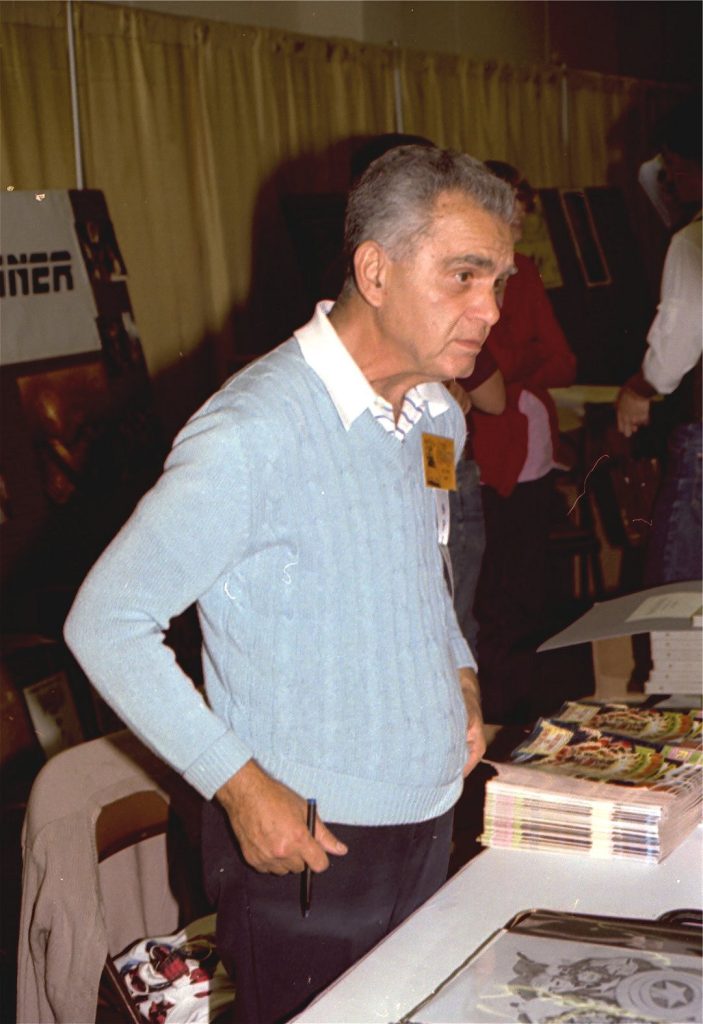
That partnership is the point, not a footnote to be tucked behind the cape. Kirby’s restless visual imagination and Ditko’s distinctive, often unsettling line work were central to the characters audiences now know. Lee helped give them speech, melodrama, editorial momentum and an inviting public voice. The medium made its magic through friction and collaboration. When the movies salute Lee, they are saluting a highly visible part of a much larger creative workshop.
Lee championed superheroes who faced everyday embarrassment and grief between saving the planet. His chatty editorial columns and irrepressible “Excelsior!” made him recognisable beyond the comics page. Directors could give audiences a little hello from a figure associated with the stories’ origins. Marvel traces his screen cameo tradition to the 1989 television film The Trial of the Incredible Hulk; the ritual grew much more visible as superhero films multiplied.
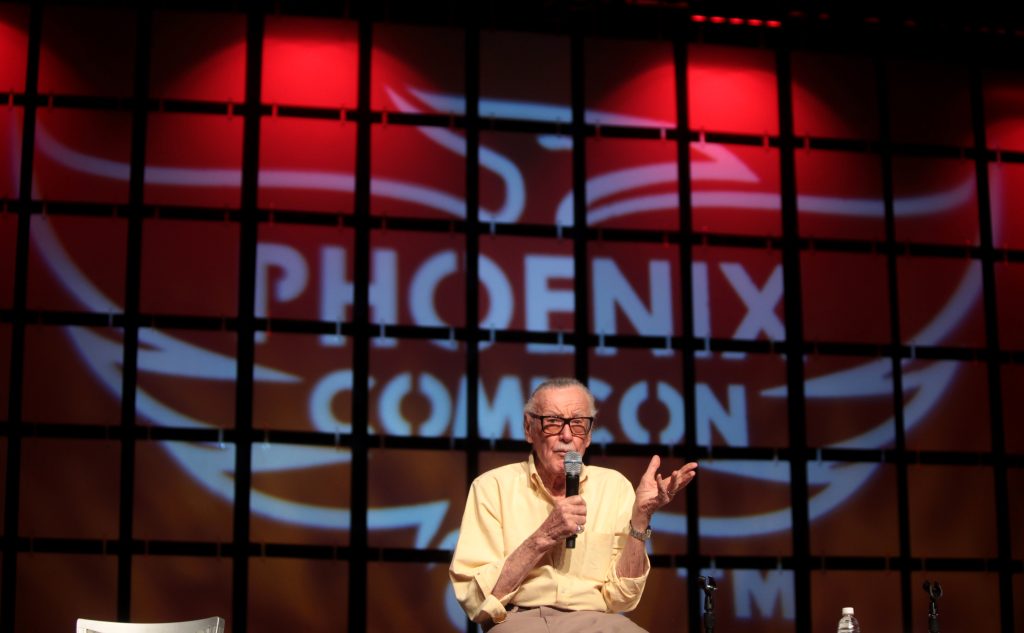
By the time films made superheroes a permanent fixture of the multiplex, Stan himself was a recognisable brand: silver hair, glasses, moustache, the expression of a man about to tell you a story whether or not you ordered one. The trick was casting him in jobs so ordinary that the contrast did the comedy. He was not there to explain the plot. He was there to remind us that a world full of wonders still needs bus drivers, librarians and mildly overconfident party guests.
Eventually the cameo became a promise. A movie might deliver a city-sized crisis, but somewhere in the rubble Stan would probably turn up to sell something, misunderstand someone or observe humanity’s newest reason to call its insurance company.
When did looking for Stan become part of the Marvel experience?
The cameo invites a particular kind of attention. Viewers know the central hero will return; they do not know whether Lee will spend three seconds in the foreground or half a minute lurking in plain sight. A first viewing might miss him. A second becomes a treasure hunt with a popcorn budget. The audience’s recognition supplies the punch line before he speaks.
That is why these moments work across wildly different tones. A child can enjoy an oblivious librarian. A comics reader can recognise a publisher’s affectionate salute. Someone familiar with production history can see filmmakers acknowledging a storyteller whose work helped make their blockbuster possible. The appearances carry several jokes at once, with no homework required to laugh at the first.
Which Stan Lee Marvel cameos are the funniest?
The librarian with world-class headphones
In The Amazing Spider-Man (2012), Lee plays a librarian listening to music as Spider-Man and the Lizard fight through the room behind him. It is a perfect silent gag: a superhero battle staged like a natural disaster, while an elderly man enjoys what must be the most effective headphones in New York. Peter Parker is risking his life. Stan is having a lovely afternoon.
Scene reference · The Amazing Spider-Man (2012)
Lee’s librarian remains absorbed in music during a fight between Spider-Man and the Lizard.
The elegance of the library gag lies in its editing. The danger is perfectly visible to us, invisible to him, and grows more absurd with every beat. Usually, the civilian in a superhero film exists to gasp, run or need saving. Here, the civilian has a private life and an excellent playlist. The catastrophe can wait until the track ends.
The Asgardian liquor experiment
At the Avengers’ party in Avengers: Age of Ultron (2015), Lee’s veteran insists he can handle Thor’s powerful drink. He cannot. The aftermath produces his signature cry, “Excelsior!”, now sounding suspiciously like a surrender. It works because the audience knows the slogan belongs to Stan himself: for a moment, the cameo is a joke about the man inside the joke.
Scene reference · Avengers: Age of Ultron (2015)
A determined guest tries Thor’s Asgardian liquor and discovers the limits of earthly confidence.
The party itself is already a clever pause before the machinery of the blockbuster revs up. Seeing the Avengers socialise gives the eventual chaos a human scale. Lee’s refusal to respect the warning about the drink fits that room: these heroes have saved worlds, yet someone’s guest still thinks he can outdrink a god. It is the sort of confidence that usually ends with somebody carrying you home.
The school bus driver who had seen enough
In Avengers: Infinity War (2018), Peter Parker’s school bus erupts in alarm at an alien spacecraft. The driver, Lee, wonders why the children are making such a fuss: have they never seen a spaceship? In this universe the question is almost fair. Marvel’s New York has survived enough invasions for a flying saucer to count as a traffic update.
Scene reference · Avengers: Infinity War (2018)
Stan drives Peter Parker’s school bus during the alien arrival in New York.
The bus cameo also belongs to a particularly fraught opening. Peter is still a teenager, and the cosmic threat crashes into an ordinary school day. Lee’s weary, unimpressed delivery briefly lets us breathe before the story demands genuine fear. It is a veteran New Yorker’s defence mechanism elevated to cinema: if the aliens are blocking traffic, complain about the traffic.
Who was the woman beside Stan Lee in X-Men: Apocalypse?
The woman standing with him in X-Men: Apocalypse (2016) was Joan Lee, his wife. As Apocalypse launches nuclear missiles into the sky, the couple watch with the frightened astonishment any sensible person would reserve for a planetary emergency. Their few seconds together lend an unexpectedly tender note to the spectacle. The missiles are fictional; the marriage on screen was real.
Joan was more than a delightful casting detail. Lee spoke warmly about her place in his life and creative confidence. Knowing the pair watch that impossible sky together makes the shot feel like a little keepsake smuggled into a blockbuster. It also answers the viewer wondering why this bystander looks so familiar: Stan brought his favourite co-star.
Scene reference · X-Men: Apocalypse (2016)
Stan and his real-life wife Joan react as nuclear missiles rise into the sky.
This was one of the rare cameos in which the moment was shared with someone the audience could identify from Lee’s actual life. It changes the way the shot plays on a rewatch. We are watching two people play frightened strangers while knowing they shared decades together away from the camera. Apocalypse has no shortage of grand gestures; this small one stays with you.
Was Stan Lee secretly a Watcher?
Guardians of the Galaxy Vol. 2 (2017) made the game stranger. Lee appears in space speaking to a group of Watchers, beings associated in Marvel lore with observing cosmic events. He recounts, among other things, his work as a FedEx delivery man, a nod to his Captain America: Civil War cameo. Eventually the Watchers wander off. Apparently even cosmic beings have a limit for delivery anecdotes.
The scene fuelled a delicious theory: perhaps every Stan cameo is the same traveller gathering stories across the Marvel universe. It certainly winks at the idea. But the broader claim that every appearance in every studio’s continuity is one canonical Watcher is a fan interpretation, not an established film rule. A playful Easter egg need not become an intergalactic employment contract.
Scene reference · Guardians of the Galaxy Vol. 2 (2017)
Lee tells stories to the cosmic Watchers, prompting a popular fan theory.
There is a useful distinction between the Watchers and the man addressing them. The beings appear in the film; their status as observers is part of Marvel’s fiction. The idea that Lee’s numerous unrelated screen roles are literally one continuous cosmic being is an interpretation of the joke. This matters because the cameos include films made under different rights arrangements and different story continuities. A theory can be enormously fun without having to survive a lawyer’s continuity diagram.
Other appearances encourage the game. In Captain America: Civil War, Lee delivers a parcel addressed to “Tony Stank.” In Thor: Ragnarok, he is an alarming barber preparing Thor for the arena. In Black Panther, he eyes a tempting pile of casino winnings. These are different little comic sketches, each tailored to the film around it. Turning them all into one secret biography is a charming pastime, but the individual jokes deserve their own applause.
How could Stan Lee appear in X-Men, Spider-Man and Avengers?
Film rights to Marvel characters were divided among studios: Fox made X-Men films, Sony made Spider-Man films, and Marvel Studios built the Avengers-led MCU. Those agreements shaped which characters and stories the studios could use. They did not mean Lee’s brief appearances had to be one character travelling between legally sealed universes. Each production could invite him as a guest.
Seeing Stan in both an X-Men film and an Avengers film therefore does not prove their stories secretly shared a continuity. It shows that different filmmakers valued the same figure and audiences enjoyed recognising him. An affectionate tradition crossed studio boundaries more easily than the licensing paperwork. For more coverage, read Astra Planet’s report on Avengers: Doomsday.
There is another distinction hidden in the question: the Spider-Man films have involved changing arrangements over time, including Sony’s collaborations with Marvel Studios. A character appearing in another studio’s film generally depends on negotiated rights. Lee’s cameos are guest performances by a real person. The fact that Sony, Fox and Marvel each welcomed him says something about his cultural reach, not about a secret crossover contract signed by the multiverse.
What was Stan Lee’s final MCU cameo?
Lee died on 12 November 2018 at 95. His final filmed MCU cameo appeared in Avengers: Endgame (2019): a digitally younger Stan drives through a scene set in 1970 with a flower-power greeting. Its release after his death gave the flash of mischief an ache no screenwriter could have arranged.
Final appearances need careful wording. Endgame was his final MCU cameo released in a Marvel Studios film, and footage had been filmed before he died. Other Marvel-related animated appearances and tributes have their own production histories. It is more accurate to describe precisely which screen universe and kind of appearance we mean than to flatten everything into the claim that he never appeared anywhere again.
He left behind beloved characters, an unmistakable public voice and a collaborative history richer than any “sole father of Marvel” label allows. The cameos preserve something simpler. In a cinema full of gods, monsters and planetary emergencies, there was room for an old man to be amused, startled, stubborn or gloriously oblivious. We kept looking for him because finding him made impossible worlds feel a little like ours.
And when the credits roll now, there is still the instinct to scan the crowd. Just in case the bus driver has one more line.
Marvel’s most enduring illusion is that extraordinary people could live around the corner. Lee’s cameos inverted it: the very ordinary fellow around the corner might be the person whose imagination helped put the extraordinary people there. There is a little editorial poetry in that. He rarely got the cape, but he always got a moment.
Stan Lee cameo questions, answered
Why was Stan Lee in so many Marvel movies?
Filmmakers invited the celebrated Marvel writer and editor to make brief guest appearances. Audiences came to expect and enjoy spotting him.
Is Stan Lee a Watcher in Marvel canon?
Guardians of the Galaxy Vol. 2 shows him talking to Watchers. Treating all his film cameos as one cosmic observer remains a fan interpretation.
Was Joan Lee in X-Men: Apocalypse?
Yes. Stan’s wife Joan stood beside him as the pair reacted to Apocalypse’s missile launch.
What was his last MCU cameo?
Avengers: Endgame (2019) featured his final filmed MCU cameo, shot before his death in 2018.
Watch an official Stan Lee tribute
Marvel Entertainment’s official video tribute offers another glimpse of the man behind the cameos. The video is hosted by Marvel; its imagery is not copied into this article.
Sources and visual credits
Marvel’s Stan Lee retrospective; Marvel’s cameo history; linked official film pages above. The film scene panels identify their source productions without reproducing unlicensed stills.
The conversation
0 comments
Join the discussion with a thoughtful response.