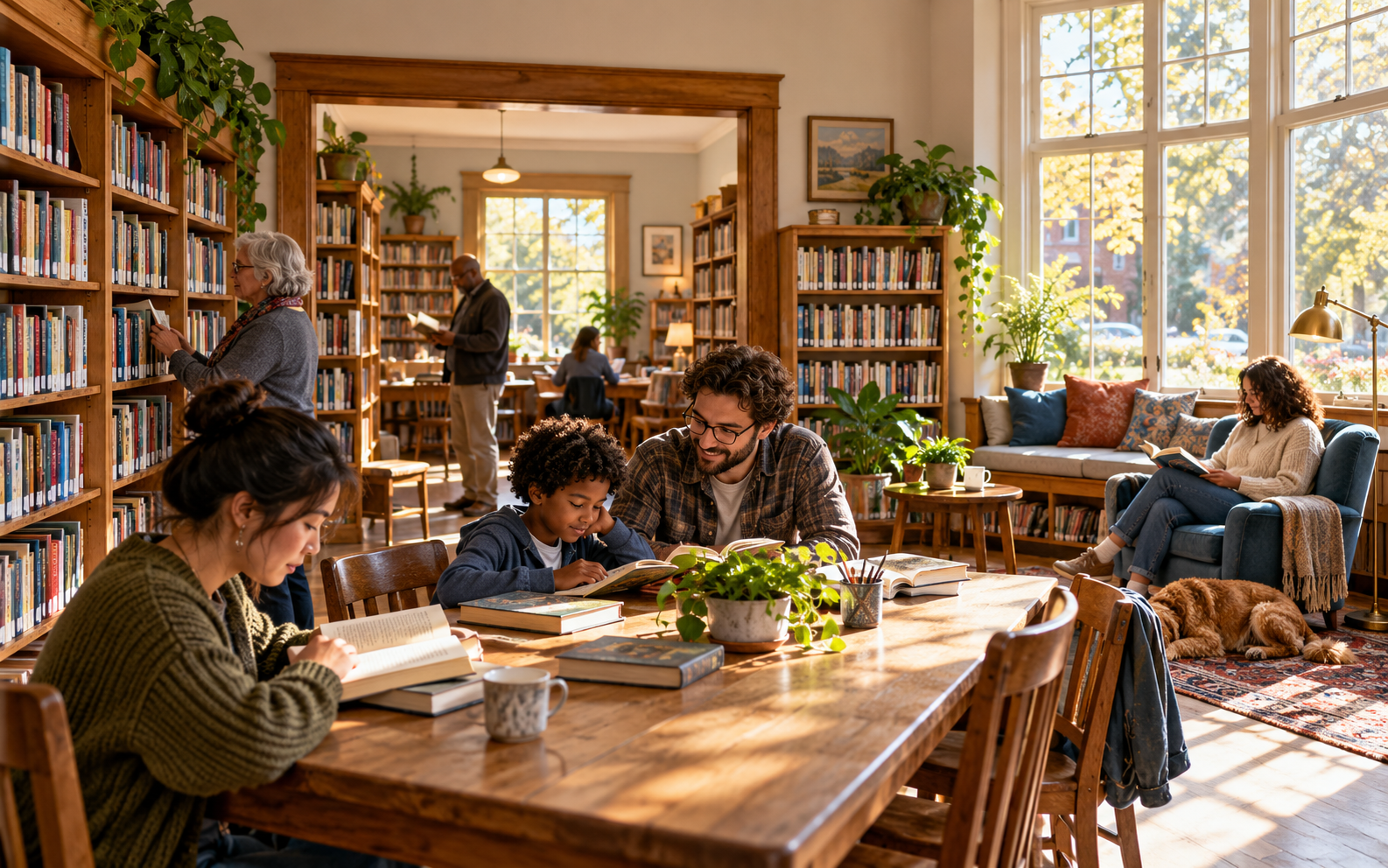

Access begins with a welcoming space
A neighbourhood library can be modest in size and still make a large difference. It offers a place to read outside the home, study when shared living spaces are busy, find reliable reference material and spend time with other learners. Its value is not measured only by the number of shelves. Opening hours, lighting, a quiet corner and books that reflect readers’ languages and interests all shape whether people return.
Community use makes a library live
The strongest community libraries are built around local needs. Students may need a table and dependable study hours; younger children may need read-aloud sessions; adults may use a space for digital skills or practical information. Listening before designing a programme avoids assuming what the community wants. Volunteers and librarians can gather suggestions through a noticeboard or short conversations, then adjust the collection and activities over time.
Support can be practical
Support does not always mean a large donation. A school, faith group or residents’ association can organise a book exchange, help repair worn shelves, share reading hours or connect the library with local teachers. Donations are most useful when they suit readers’ ages, interests and languages and can be maintained by the people managing the collection. UNESCO’s public work on literacy and lifelong learning treats access to learning as a continuing social priority. A library makes that priority tangible: a dependable place to think, learn and share knowledge together.
Source: Read the reporting reference