
Read the fabric before the wash
A thoughtful wardrobe does not begin with buying more. It begins with noticing what is already there: the loose seam, the missing button, the fabric that needs gentler handling. Care labels give a starting point, but the construction matters too. A handwoven or embellished garment may need more care than a sturdy everyday shirt. Test uncertain cleaning methods on an inconspicuous area or ask the maker for guidance, especially when a piece carries cultural or monetary value.
Small repairs keep useful clothes in rotation
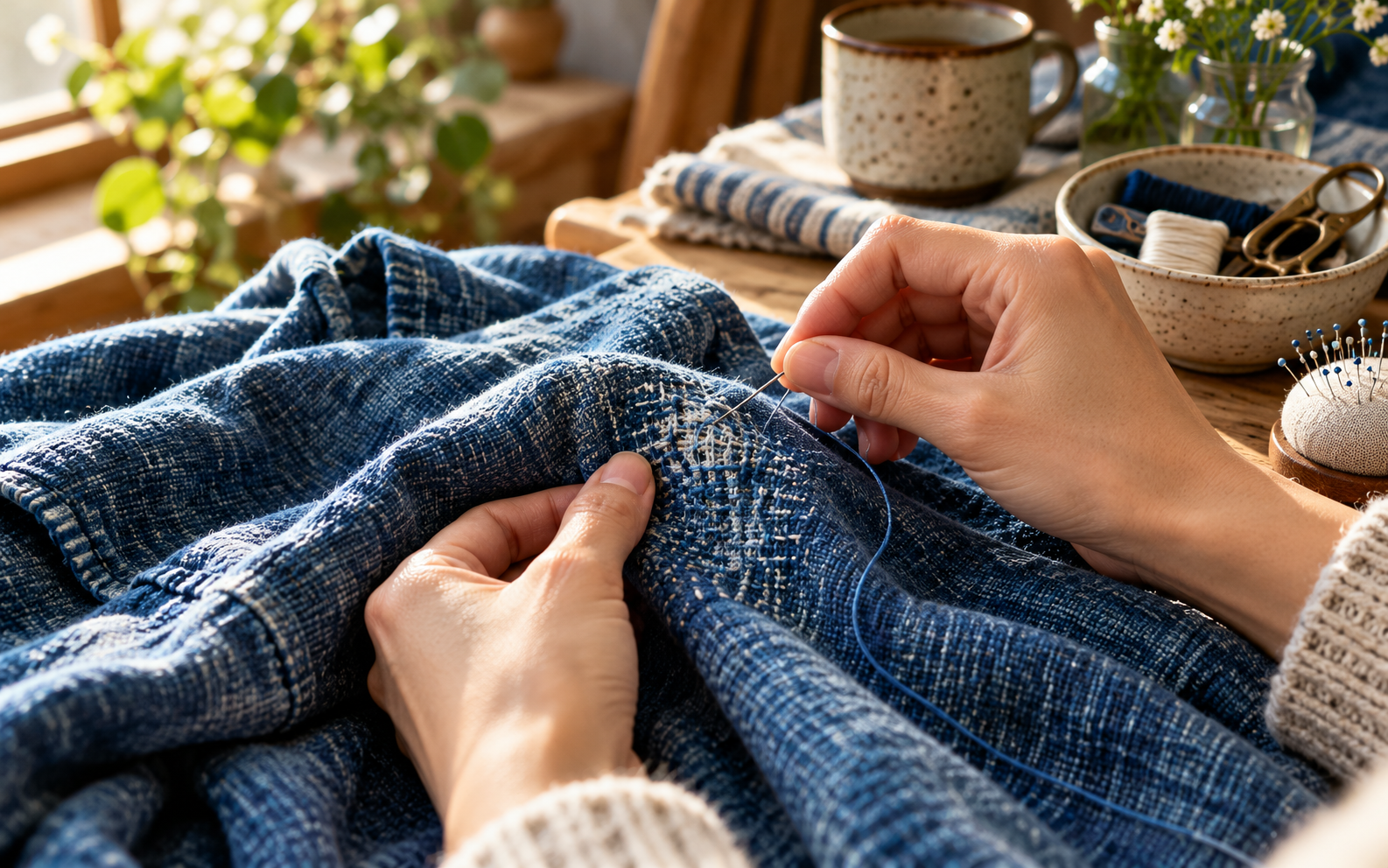
A small repair can prevent a minor tear from becoming a reason to discard a garment. Sewing on a button, reinforcing a seam or asking a tailor to alter a piece makes use of skills that remain valuable in many Nigerian communities. Repair is also an economic choice: it gives the owner more use from a purchase and supports local service providers. Keep spare buttons and fabric scraps when possible; they can help with later mending.
Care connects people to craft
The story of cloth is a story of labour. Yoruba adire and aso-oke, for example, carry techniques developed by makers, and caring for a garment can keep that work in use instead of reducing it to a one-time fashion image. A useful weekly ritual is to air garments between wears where appropriate, treat stains promptly according to care instructions and set aside one item for repair. The aim is not a perfect capsule wardrobe. It is a more attentive relationship with the clothes already in circulation and the people who made or mend them.
Source: Read the reporting reference