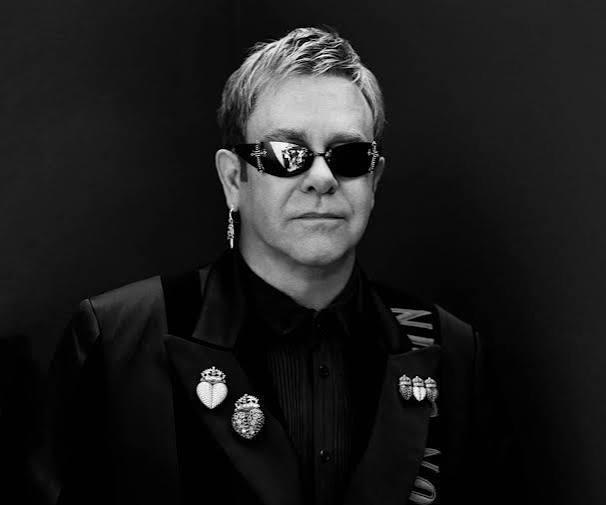

Elton John’s “Sacrifice”: The Beautiful Funeral Song for a Love That Died Quietly - Written by Knight Fredel
How one soft-rock classic turned marital collapse into poetry, silence, and emotional autopsy

Elton John’s “Sacrifice” is one of those songs.
To many casual listeners, it sounds like a tender ballad about devotion, loyalty, and the painful things people give up for love. That assumption is understandable. The title alone walks into the room like a priest carrying incense. “Sacrifice” sounds noble. Sacred. Mature. The kind of word people use when they want to make emotional suffering look like a respectable adult investment.
But the song itself is far colder, wiser, and more tragic than that.
“Sacrifice” is not really about the heroic pain of keeping love alive. It is about the exhausted truth that sometimes love dies long before two people officially separate. The wedding ring may still be on the finger. The family photo may still be hanging on the wall. The neighbors may still think everything is fine because, of course, neighbors are often professional spectators with poor data. But inside the relationship, the emotional climate has changed. Warmth has left the building. Affection has packed a suitcase. Communication has become a courtroom where every word is cross-examined.
And that is where Elton John and Bernie Taupin’s genius quietly enters the room. #smile
Released from Elton John’s album Sleeping With the Past, “Sacrifice” became one of the defining songs of his late-1980s and early-1990s career. Elton’s official discography notes that Sleeping With the Past was dedicated to his longtime songwriting partner Bernie Taupin and featured “Sacrifice,” which later became Elton’s first solo UK No. 1 single. The Official Charts Company records that the original 1989 release of “Sacrifice” peaked at No. 55 in the UK, but when reissued in 1990 as a double A-side with “Healing Hands,” it reached No. 1 and stayed there for five weeks.
That chart journey is almost poetic in itself. The song did not explode immediately. It waited. Then it returned stronger, like a memory that refused to remain politely buried. Very “adult heartbreak,” honestly. It did not kick the door down. It came back with receipts.
A song written for adults, not fairy tales
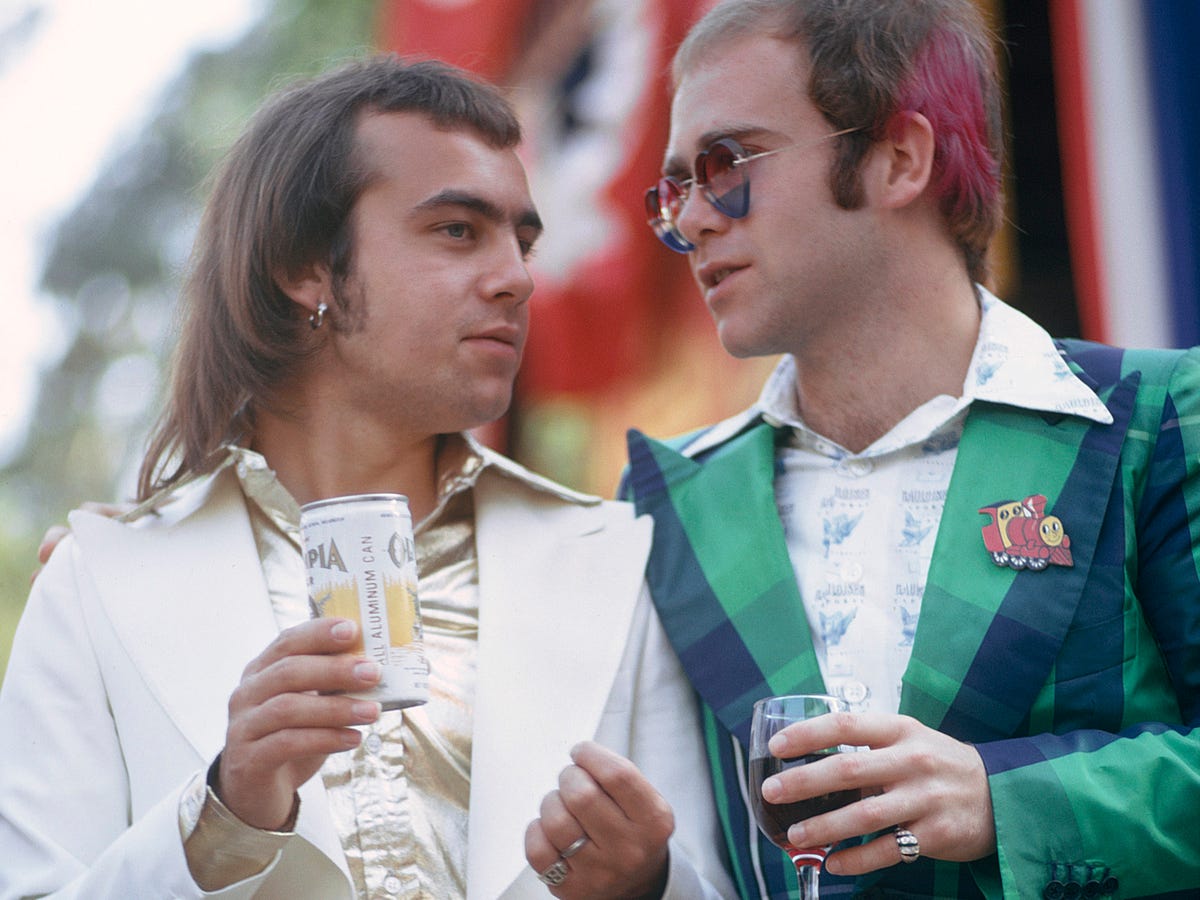
Bernie Taupin, Elton John’s longtime lyricist, described “Sacrifice” as an intelligent adult lyric about the rigors of adult love, far removed from the innocent emotional world of Elton’s earlier classic “Your Song.” That distinction matters.
“Your Song” is youthful openness. It is romance before the bills, the boredom, the suspicions, the temptations, the disappointments, the silent dinners, and the long nights when two people lie beside each other like neighboring countries at diplomatic war.
“Sacrifice,” on the other hand, belongs to the adult wing of love, the section where the paint is peeling, the air conditioning is faulty, and everybody has baggage with broken wheels. This is not the love of first glances and butterflies. This is the love of accumulated damage. The kind where two people do not necessarily hate each other, but they have forgotten how to be soft with each other.
The love is there; love doesn’t just disappear. If you truly followed my romance write-ups, especially from our mother-magazine platform, Awake Afraka Magazine, you’d know I always say that love never dies. If it’s genuinely there, if it has ever been there, it will always remain. The difference is we sometimes forget how to love, we get distracted, and we focus on things that don’t really matter; and that’s the truth.
But there are those couples who rushed into marriage, never truly in love but merely lustful toward each other, mistaking those feelings for love.
The song explores a marriage strained by deep emotional pressure, capturing both those who once truly loved but lost sight of it due to their focus on distractions, and those who believed they were in love only to find, after years together, that the feelings they once shared had vanished. The song further delves into temptation, infidelity, pride, misunderstanding, resentment, and the gradual decay of intimacy. The pain it conveys is not explosive but chilled, like something preserved over time. There are no dramatic plate-throwing scenes, only a quiet tragedy where two people remain physically present, yet emotionally apart.
That is a more dangerous kind of heartbreak.
Because when love ends loudly, everyone knows there has been a fire. But when love ends quietly, people keep sitting in the smoke and calling it normal.
The Title is the Trap
The word sacrifice usually suggests something grand: surrendering something precious for a higher purpose. In religion, sacrifice is sacred. In romance, it is often sold as proof of devotion. In family life, sacrifice is praised so much that people sometimes lose themselves and call it maturity. Society loves sacrifice because it makes pain look productive.
But the song twists the word.
The emotional argument of “Sacrifice” is not that love requires endless suffering. It is almost the opposite. It suggests that when two hearts are already living in emotional separation, leaving may no longer be the huge sacrifice outsiders imagine it to be. The real sacrifice happened earlier, in silence, in compromise, in swallowed anger, in ignored loneliness, in the slow surrender of self-respect.
By the time the relationship collapses, what is left to sacrifice?
That is the cruel elegance of the song. It does not scream, “Love is dead.” It simply shows us the corpse sitting at the dining table, pretending to enjoy breakfast. Imagine that... But how can a corpse enjoy breakfast when it's not even alive to begin with? Now that's where you get your answer; from that question.
A lesser song would have turned the story into a melodrama: cheating partner, betrayed spouse, tears, revenge, rain, probably a broken wine glass for cinematic seasoning. “Sacrifice” refuses that cheap theatre. It understands that emotional betrayal is often less theatrical and more psychological. It begins when affection becomes a routine, when admiration becomes criticism, when desire becomes duty, and when home becomes merely the place where two people store their furniture and unresolved trauma.
The Cold Heart: Emotional Distance as the Real Villain
At the center of the song is not just infidelity. It is emotional coldness.
This matters because many people reduce “Sacrifice” to a song about cheating. Temptation is certainly part of the story, but it is not the whole story. Infidelity in the song is presented less as the original disease and more as a symptom of something already infected.
People rarely wake up one morning and destroy a loving, healthy relationship for sport, unless, of course, they are emotional arsonists. Usually, betrayal grows in environments where intimacy has already been starving. Someone feels unseen. The other feels controlled. Someone feels unwanted. The other feels superior. Someone feels trapped. Then another person outside of the relationship enters the picture offering attention, novelty, and the dangerous narcotic of being desired again. And that is when infidelity begins... Cheating; Betrayals.
That does not excuse betrayal. Not even slightly. Wrong is still wrong, even when it comes with an emotional backstory. But the song is more interested in diagnosis than some sort of courtroom judgment.
The phrase “cold heart” in the song represents emotional shutdown. It is what happens when pain becomes self-protection. One partner withdraws to avoid being hurt. The other interprets the withdrawal as rejection. Then they both begin building walls and calling them boundaries. Soon, the relationship becomes a house full of locked rooms.
This is why the song still resonates decades later. It understands that the opposite of love is not always hatred. Sometimes the opposite of love is indifference. A person who hates you still has emotional heat. A person who feels nothing has already left the room spiritually, even if their body is still sitting beside you watching television.
The Tragedy of Misunderstanding
Another powerful theme in “Sacrifice” is misunderstanding.
In many broken relationships, people are not only fighting about what happened. They are fighting about what they think happened, what they believe it meant, and what their wounds have translated it into. One careless statement becomes evidence. One late night becomes suspicion. One silence becomes punishment. One mistake becomes a prophecy.
This is how sensitivity becomes a prison.
When two people are emotionally injured, they stop hearing each other clearly. Every word arrives wearing the same clothes representing their previous pain. A simple question sounds like an accusation. Even a simple request sounds like control. And also, in many cases, an apology sounds like manipulation.
At that point, even peace becomes suspicious. The relationship starts operating like a faulty courtroom where both partners are lawyers, witnesses, victims, and judges at the same time. Naturally, nobody wins. But everyone submits exhibits.
“Sacrifice” captures that adult nightmare beautifully. It does not present love as a simple matter of two good people trying hard enough. It acknowledges that two people can love each other and still fail each other. They can share history, children, memories, and even affection, yet still become strangers because they no longer speak the same emotional language.
That is one of the saddest forms of separation: not when someone leaves the house, but when they stop being reachable even when they are inside that house.
The Music: Soft, Polished, and Emotionally Devastating
Musically, “Sacrifice” is restrained. It does not attack the listener with drama. It glides. Elton John’s vocal performance is controlled, almost weary, as if the narrator has moved beyond outrage into the more frightening territory of acceptance.
That restraint is part of the song’s power.
A big vocal explosion might have turned the song into a standard heartbreak anthem. Instead, Elton sings like someone explaining the terms of an emotional bankruptcy. There is sorrow, but not hysteria. Pain, but not performance. The arrangement gives the song a smooth, late-night atmosphere, the kind of sound that belongs to empty roads, half-lit rooms, and people staring at ceilings at 2 a.m. wondering when exactly the marriage became a museum.
The production also helps the song feel emotionally adult. It is not raw in the messy sense; it is polished like expensive sadness. That polish makes the pain more haunting, because it suggests a couple who may still look respectable from the outside. No scandal visible from the street. No public collapse. Just two people living inside an elegant emotional ruin.
This is one of Elton John’s great gifts: the ability to make sorrow sound luxurious without making it dishonest.
The Music Video: The Family as Collateral Damage

The official video for “Sacrifice” deepens the song’s meaning by focusing on a marriage in trouble and the child caught inside the emotional fallout. Elton John’s official site notes that the video was directed by Alek Keshishian, starred Canadian model Yasmeen Ghauri, and was filmed in Los Angeles in 1989. The video’s narrative follows a couple dealing with marital breakdown, raising a daughter, and eventually moving into separation.
This visual interpretation is important because it shifts the song away from abstract romance and into family consequence.
When adults break each other, children often inherit the weather.
The child in the video represents the innocent center of the storm. She did not create the emotional distance. She did not invite betrayal. and neither did she sign up for adult confusion disguised as “we’re fine.” Yet she becomes part of the cost. This is why the song’s title becomes even heavier. The sacrifice is not only between two adults. It is also paid by the family structure, by childhood security; the small person learning too early that love can become a room people leave.
That is the unglamorous truth many love songs avoid. Romantic collapse is rarely private when a family is involved. The couple may think they are only hurting each other, but emotional earthquakes travel through walls.
Why People Mistake it for a Love Song
Now, let's talk about the elephant in the room; why people always mistake it for a love song... Well, if you ask me, I'd say the confusion around “Sacrifice” is understandable because the song sounds beautiful. And beauty can be deceptive. Most listeners first hear the melody, then get the message later... That is if they'd ever get to the message at all.
This happens often in popular music. A sad song becomes a wedding song because the chorus sounds sweet. A breakup anthem becomes a couple’s anthem because people hear the word “love” and immediately start renting chairs. Human beings, bless our emotionally chaotic species, have a special talent for dancing to songs that are quietly warning us. Especially Nigerians, and Africans in general, rarely pay attention. In fact, people around the world these days hardly pay attention, and that’s not a good thing.
“Sacrifice” has the sonic surface of romance but the lyrical soul of divorce court meditation. Its softness makes people lean in. Its sadness makes them stay. But its message is not sentimental. It is surgical.
It tells us that love is not destroyed only by major betrayals. It is also destroyed by small daily abandonments. By contempt. By neglect. By the refusal to listen. By the ego’s need to win every argument while the relationship loses the war. By the foolish assumption that because someone is still physically present, they are still emotionally available.
This is why the song remains relevant. It is not trapped in the 1980s. It belongs to every era where people confuse staying with loving, endurance with intimacy, and silence with peace.
The Adult Lesson: Love Cannot Survive on History Alone
One of the deepest messages of the song “Sacrifice” is that shared history is not enough. ##
A couple may have years together. They may have survived hardship. They may have children, property, memories, inside jokes, old photographs, and a long list of reasons to remain connected. But history is not intimacy. History is only evidence that something happened. It does not prove that the thing is still alive.
Many relationships continue because of what they used to be. The partners keep honoring the ghost of an earlier love, hoping the living version will return. Sometimes it does. Often, it does not. And when it does not, people begin sacrificing their present to preserve a past that no longer breathes.
That is where “Sacrifice” becomes brutally honest. It asks an uncomfortable question: when love has already become emotional separation, is staying noble, or merely fear wearing formal clothes?
This question is not simple. The song does not mock commitment. It does not encourage people to abandon relationships at the first sign of difficulty. Adult love requires patience, humility, repair, forgiveness, and work. Real love is not a hotel breakfast where everything is served warm and replaced when mildly inconvenient.
But the song recognizes a painful truth: there is a difference between working through a difficult season and living permanently inside emotional winter.
The spiritual reading: when two souls stop meeting
Beyond romance, “Sacrifice” can also be read spiritually. Every serious relationship is not merely two bodies sharing space; it is two inner worlds attempting communion. Love is not just attraction. It is recognition. It is the repeated act of seeing and being seen.
When that recognition fades, the soul begins to experience loneliness even in company.
That is why a person can be married and still feel abandoned. They can sleep beside someone and feel untouched. They can speak daily and never feel heard. Physical proximity becomes meaningless when the emotional and spiritual bridge has collapsed.
In this sense, “Sacrifice” is a song about separation before separation. The divorce begins internally. The papers come later. The bedroom grows cold before the lawyers grow busy. The heart signs out before the hand removes the ring.
This is also why the song has such a haunting aftertaste. It does not simply say, “They broke up.” It says, “They stopped reaching each other.”
That is a different kind of death.
Why the song became a classic
“Sacrifice” endured because it speaks to a mature emotional reality. Young love songs often celebrate longing, passion, and fantasy. Adult love songs have to deal with disappointment, fatigue, temptation, regret, and the cost of choices. “Sacrifice” does not flatter the listener with illusions. It respects the listener enough to tell the truth softly.
Its success also marked an important moment in Elton John’s career. The official Elton John discography identifies “Sacrifice” as his first solo No. 1 in the UK, while Official Charts records the 1990 “Sacrifice/Healing Hands” release reaching No. 1 after first charting on June 9, 1990. For an artist already associated with decades of flamboyance, grandeur, and unforgettable pop craftsmanship, “Sacrifice” showed another face: quiet devastation.
No giant glasses required. No feathers. No stage fireworks. Just a melody, a wounded lyric, and the sound of a marriage being lowered gently into the ground.
Very efficient heartbreak. British, almost.
What “Sacrifice” teaches modern relationships
The song’s message is painfully relevant today, perhaps even more than when it was released. Modern relationships face old problems with new technology. Temptation now has notifications. Emotional neglect now hides behind “I’m busy.” Infidelity can begin with a harmless message, then grow into a private world with emojis, deleted chats, and the kind of secrecy that makes common sense pack its bags.
But the foundation remains the same.
Relationships die when people stop maintaining emotional presence.
They die when partners assume love can survive without tenderness. They die when apologies become rare and pride becomes policy. They die when one person is always explaining pain and the other is always defending intent. They die when the relationship becomes a competition over who suffered more. They die when desire is treated as automatic, communication as optional, and loyalty as something that exists simply because nobody has publicly left.
“Sacrifice” warns us that the real danger is not always the stranger outside the marriage. Sometimes the danger is the silence inside it.
A relationship can survive temptation if there is honesty. It can survive conflict if there is humility. It can survive disappointment if there is repair. But it cannot survive permanent emotional exile.
The Final Meaning
At its core, Elton John’s “Sacrifice” is a song about the death of intimacy.
It is about what happens when two people who once shared a world become separate planets. It is about the strange sadness of realizing that the relationship did not collapse suddenly; it dissolved gradually. One misunderstanding at a time. One cold silence at a time. One temptation at a time. One unspoken resentment at a time.
The tragedy is not simply that love ended. The tragedy is that it may have ended long before anyone had the courage to say so.
That is why “Sacrifice” remains powerful. It does not offer easy villains. It does not reduce adult love to cartoon morality. It does not pretend that heartbreak is always loud, simple, or cinematic. Sometimes heartbreak is quiet. Sometimes it wears a wedding ring. Sometimes it makes breakfast, drives the children to school, answers “I’m fine,” and dies politely in the corner.
Elton John gave that quiet death a melody.
Bernie Taupin gave it language.
And decades later, the song still asks listeners to look at love with adult eyes: not as fantasy, not as performance, not as a social certificate, but as a living emotional bond that must be fed, protected, and renewed.
Because when two hearts have already moved into separate worlds, leaving may not be the sacrifice.
The sacrifice may have been staying too long after the love had already gone.
I love this site, Astra!
I truly appreciate your technique of writing a blog. I added it to my bookmark site list and will
Thank you for you support