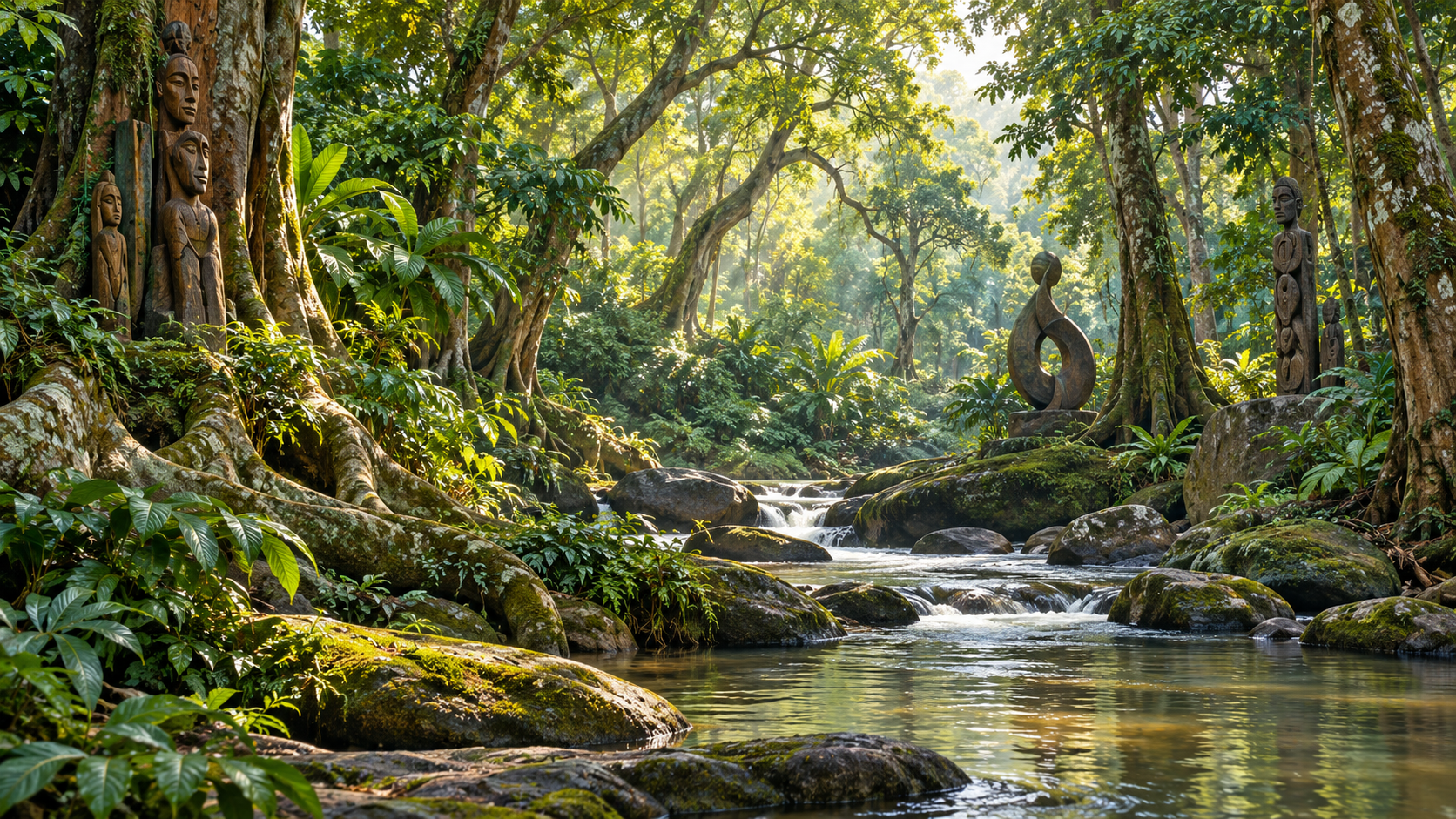

A forest and a living place of worship
At the edge of Osogbo, the Ọṣun River winds through a forest of shrines, sculptures and sacred places. UNESCO describes the grove as an active religious site, with worship throughout the year and an annual festival that sustains Yoruba cultural traditions. It is also a protected landscape and one of the last large sacred groves to survive in Yorubaland. Calling it a tourist attraction alone would miss the people and practices that keep it alive.
Art and stewardship share the landscape
The grove’s more recent sculptures are part of its history too. Artists associated with the New Sacred Art movement helped restore and reinterpret the site in the twentieth century, strengthening its cultural and spiritual significance. UNESCO notes that the grove is vulnerable to over-visiting, which can disturb the balance between people and the natural environment. That makes visitor behaviour part of the heritage question, not a footnote to it.
Travel begins with listening
A responsible visit starts by following current guidance from the site’s custodians and local authorities. Ask before photographing people or ceremonies; follow instructions about where to walk; avoid treating shrines as props; and respect worshippers’ privacy. Travel details such as access, opening arrangements and any restrictions can change, so confirm them locally before setting out. The grove offers a rare encounter with Yoruba religious life, contemporary sculpture and forest ecology. The best way to receive that experience is to arrive as a guest, learn from the people who care for the place and leave its sacred balance intact.
Source: Read the reporting reference