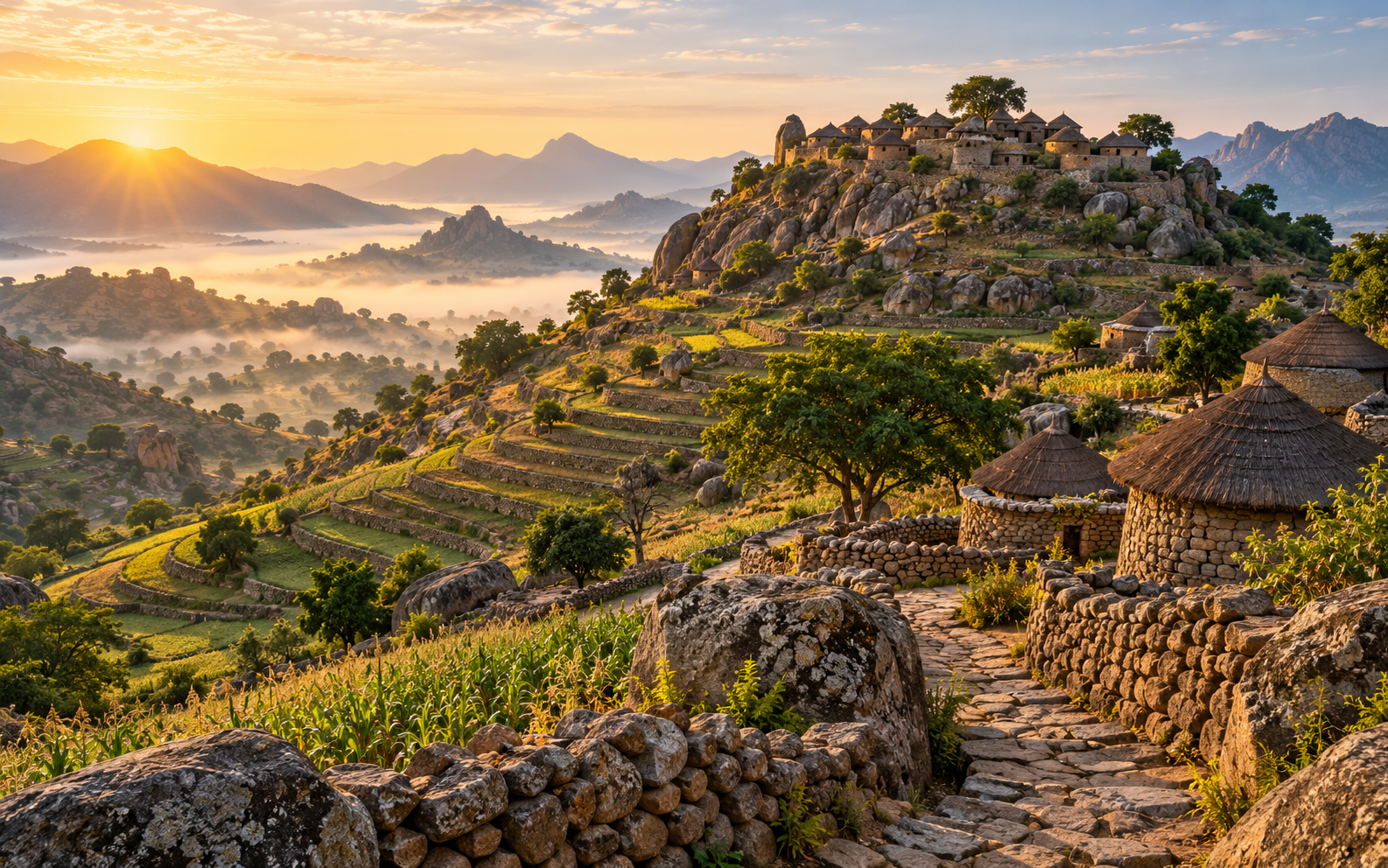

A settlement written into the hillside
Sukur Cultural Landscape rises above the plains of north-eastern Nigeria, near the Cameroon border. UNESCO inscribed it in 1999, recognising a place where the Hidi’s palace, terraced fields, stone-paved paths, ritual features and remains of iron production form one connected cultural landscape. Its architecture is not a detached monument. Paths link the settlement to fields, homes, work and a wider system of community life.
Architecture grows from a working landscape
The terraces tell a story about how people shaped difficult ground for cultivation; the stone structures and ironworking remains speak to organisation, skill and exchange. UNESCO’s designation places Sukur among heritage of international importance, but a listing does not substitute for the community’s own understanding of the place. The landscape continues to be lived and remembered. Its meaning is found in the relationship between built forms and the people who maintain them.
Plan around local guidance
For travellers, logistics should be checked with local authorities and guides before departure. Roads, access arrangements and security conditions can change, so a current local check is essential; this feature is not a route or safety advisory. Visitors should ask before photographing residents or entering private or sacred areas, follow community protocols and avoid removing stones or objects. Sukur is remarkable because its features hold together: palace, terraces, paths and productive land. Seeing the whole landscape makes the visit more meaningful than treating it as a checklist of isolated sights.
Source: Read the reporting reference