
António Guterres used his last address to the UN General Assembly as secretary-general to deliver a warning about a world whose crises are outpacing its machinery for dealing with them. Wars, artificial intelligence and climate change featured in Tuesday’s speech, alongside a call to repair international institutions under severe strain.
The address comes as his second five-year term approaches its 31 December end. Speaking to leaders gathered in New York, Guterres urged countries developing powerful AI systems to share information about emerging safety risks, cooperate on testing and work toward common safeguards. He called for a multilateral framework with credible independent oversight, according to Reuters’ reporting on the address.
That proposal sits beside a more familiar diplomatic problem: governments still struggle to stop armed conflicts through the institutions they created for that purpose. On the Middle East, Guterres urged de-escalation and dialogue, an end to fighting, humanitarian access and respect for navigation rights under international law. He again defended a two-state solution for Israelis and Palestinians.
A difficult handover
Guterres said mechanisms for collective action were under growing pressure and that global institutions still reflected the power arrangements of another era. The criticism was aimed at an uncomfortable reality for the UN: major powers often act outside its processes, while funding and political support remain contested.
The secretary-general also argued that those responsible for pollution should bear the cost of climate damage. His remarks linked three debates that are frequently treated separately: who sets the rules for new technology, who enforces international law, and who pays when global risks fall most heavily on countries with the least power.
The address was a statement of priorities rather than an agreement. Governments have yet to negotiate the AI safeguards he sought, and the Assembly cannot by itself end the conflicts he described. The approaching leadership transition now gives member states a concrete question: whether the next secretary-general will inherit stronger tools, or simply a longer list of emergencies.
Context: The UN’s 2026 high-level week programme sets out the concurrent meetings on climate, pandemic preparedness and other international priorities.
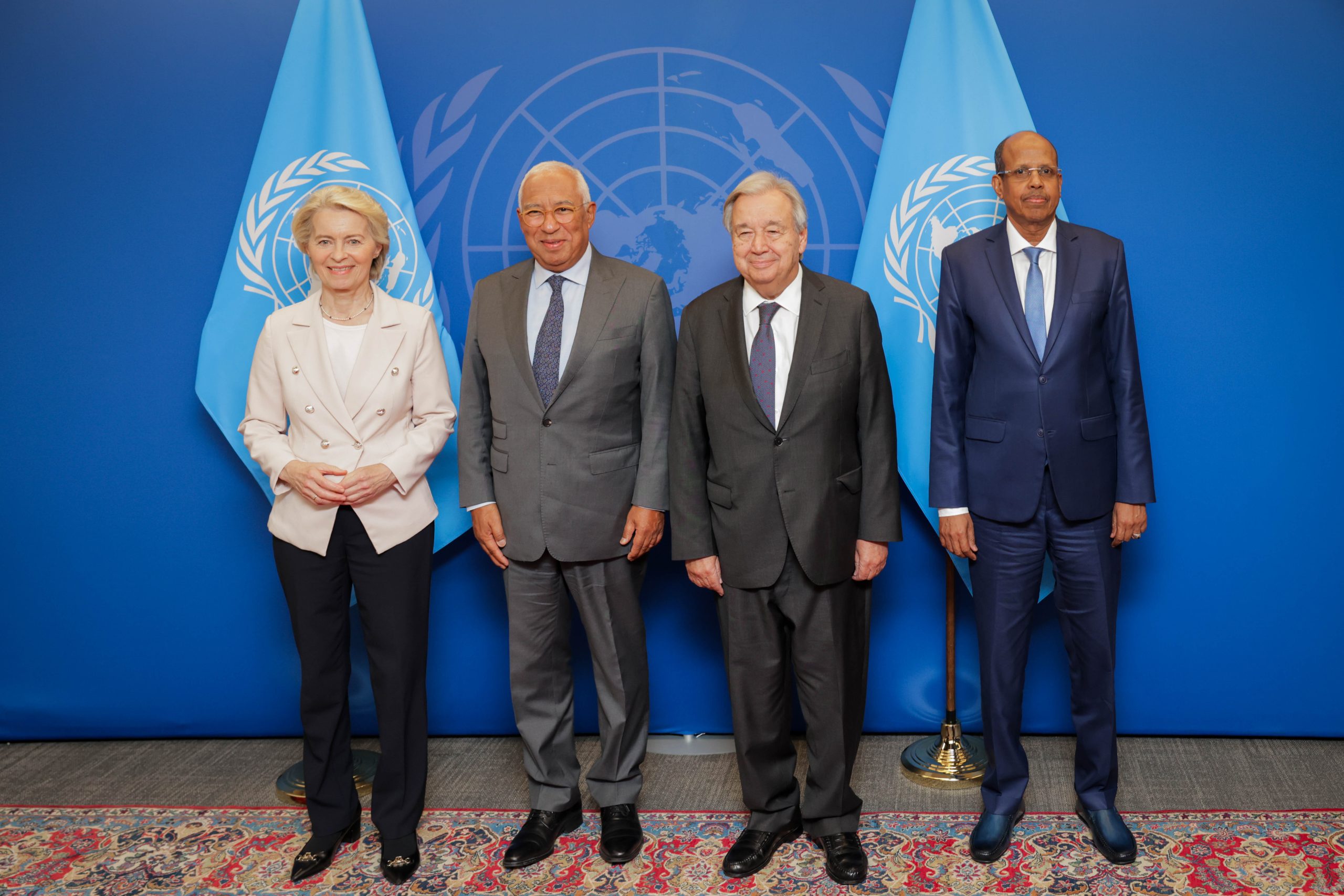
Featured photograph: European Union / Dati Bendo, CC BY 4.0. Taken at UN meetings on 20 September; it is not a photograph of the Assembly address. Original file; site display may crop the preview.
The conversation
0 comments
Join the discussion with a thoughtful response.